The Ethics of Equine Sanctuary: Why "Letting Nature Take Its Course" in Confinement is Neglect
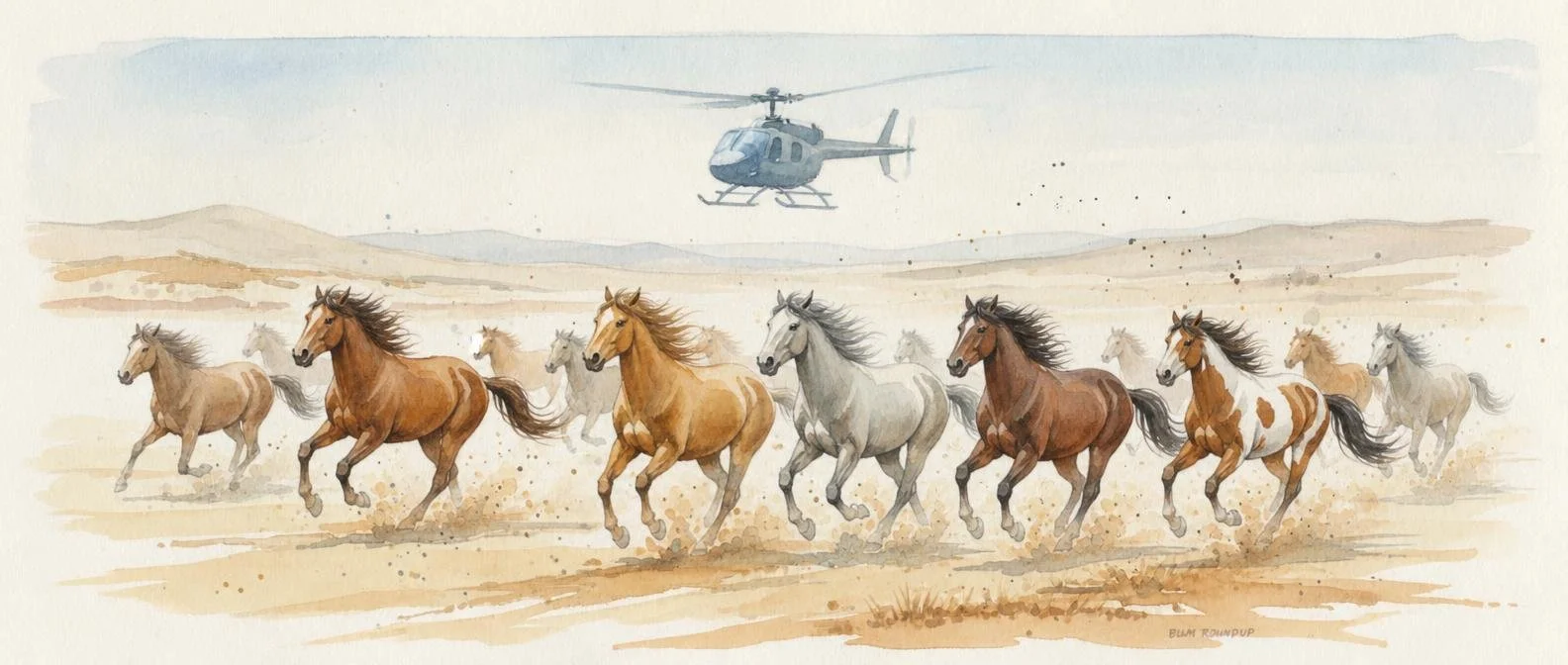
In the world of equine rescue and sanctuary work, there is a dangerous, romanticized lie surrounding the concept of wild Mustangs and Burros. We fall in love with the image of the unbridled spirit—the hardy, invincible horse thundering across rugged desert basins, sure-footed, majestic, and completely self-sufficient.
However, I am here to tell you the raw, unvarnished truth: that romantic image is completely shattered the moment a wild horse or burro is rounded up, removed from public lands, and brought into a rescue or sanctuary environment.
The second a wild animal enters a domestic enclosure, the fantasy ends, and full human responsibility begins. Yet, all too often, well-meaning caregivers and far too many sanctuary directors fall into a subtle, lazy, and utterly devastating trap: the myth of replicating the wild within domestic enclosures.
Let's get one thing straight right now. A 20 acre pasture is not the wild. A 40 acre turnout with some rocks and a dirt hill is not the wild. A track system on a private ranch is not the wild. It doesn't matter how beautiful your property looks on Instagram, how scenic your sunset photos are, or how deeply you want to believe your horses are "living as nature intended." The second you put four fences around an animal, you have taken away their freedom, their natural survival strategies, and their ability to care for themselves.
Confinement changes everything. When you strip an animal of their wildness, you don't get to wash your hands of their domestic needs under the noble-sounding excuse of "keeping them natural." Calling neglect "nature" isn't sanctuary work—it's an excuse for an inability or unwillingness to provide basic, essential care.
And nowhere is this dangerous delusion more prevalent—or more painful for the animal—than in routine hoof care.

The Science of the Hoof—The Wild vs. The Illusion of Confinement
To really understand why a captive horse’s feet disintegrate without our intervention, we have to stop looking at the hoof as just a hard block of fingernail at the bottom of a leg.
When you get up close and actually work with these animals day in and day out—listening to the farrier, holding a leg, feeling the heat in a hoof capsule when something is wrong—you realize that equine feet are an absolute marvel of natural engineering. They are alive, dynamic, and constantly adapting to every step the horse takes. But that engineering was built for a very specific lifestyle.
So, let's break down what's actually happening inside that hoof, how nature designed it to work out on the open range, and why our domestic setups—no matter how well-intentioned—completely disrupt that natural balance.
Anatomy of an Active Hydraulic System
The equine hoof is not a static, insensitive block of horn; it is an active, flexible, vascular pump. Inside the hoof capsule sits the coffin bone (P3), suspended by thousands of microscopic, interlocking tissue folds called laminae. Directly behind the coffin bone lies the digital cushion—a thick, fibro-fatty structure flanked by lateral cartilages that serves as the foot's primary shock absorber.
When a horse impacts the ground, the heel lands first, expanding laterally and compressing the frog and digital cushion. This compression flattens the vascular arches inside the foot, forcing venous blood back up the leg toward the heart against gravity. The hoof acts as a secondary heart—a hemodynamic pump that relies entirely on impact and movement to function properly.
The 20 to 60 Mile Daily Wear Mechanism
In freedom, a herd of wild Mustangs moves continuously. They do not move for exercise; they move out of biological necessity—traveling between water holes, seasonal grazing grounds, salt licks, and shelter.
Wild Mileage: A wild horse routinely covers 20 to 60 miles per day.
Constant Abrasion: Every single step is taken over varied, unforgiving ground—volcanic rock, granite, gravel, hard-packed clay, and coarse sand.
The Mustang Roll: As the outer hoof wall grows (roughly 0.2 to 0.4 inches per month), constant friction against abrasive terrain causes micro-fractures along the outer wall. This breaks off tiny chips, naturally beveling the edge into what farriers call a Mustang Roll.
Exfoliation & Development: The sole continuously exfoliates through friction against gravel and sand, preventing thick buildup of dead skin, while tens of thousands of impacts per day develop a thick, resilient digital cushion and strong cartilage.
The 20 Acre Confinement Fallacy
Compare that wild reality to life in sanctuary confinement. Even on a property with rocky ground, hills, or custom tracks, a herd on 20 acres simply cannot duplicate that daily mileage or wear profile.
The Domestic Stride Count: In a pasture, food and water are rarely more than a few hundred yards apart. Most pasture-kept horses travel less than 3 to 5 miles a day.
Moisture and Nutrition: Pasture soils retain moisture, softening the hoof capsule, while steady forage encourages rapid horn growth.
The Result: Without 20 to 60 miles of daily travel over abrasive rock to wear that growth away, the hoof wall flares, cracks, chips, and distorts.
Adding a few rock piles or building a track on a 20 acre pasture is a wonderful enrichment tool, but it does not eliminate the need for professional trimming. Expecting hooves to self-trim in a small paddock is like expecting human fingernails to trim themselves because you touched a brick wall twice today. And yes, when it comes to hoof care, I am absolutely calling plots of acreage small.

The Ethics of Sanctuary Work: Care Over Romanticism
Sanctuary work is not about living out a romantic fantasy of wild horses thundering through high-desert sagebrush while we watch from the porch with a cup of coffee. It isn't a fairy tale, and it isn't a vanity project.
It is heavy, raw, daily stewardship.
When I first stepped into the world of equine rescue, I quickly learned that the most dangerous mindset in this field is the romanticization of captivity. It’s easy to fall in love with the ideal of "keeping them wild." It feels noble. It looks beautiful in video clips. But let me speak from the heart and from the trenches: the moment we put up a perimeter fence around a wild horse or burro, their relationship with nature changes forever.
Confinement Creates Absolute Dependence
In the wild, nature takes its course—unfiltered, uncompromising, and sometimes brutal. A wild Mustang ranges across thousands of unfenced acres. If the soil in one valley is too soft, they move to the rocky ridges. If a waterhole dries up, they travel 20 miles to another. If they lack minerals, they find natural licks. Their movement is their medicine, their survival, and their farrier.
But the exact second we shut the gate on a domestic enclosure—whether it’s a 5 acre dry lot, a 20 acre pasture, or even 250 acres—we strip away every single one of those natural survival mechanisms.
They can no longer wander 40 miles to wear down an overgrown hoof wall. They can no longer migrate to escape knee-deep mud during spring thaw. They can no longer seek out specific vegetation or minerals to balance their diet.
We took away their freedom. In return, we owe them complete accountability.
Confinement creates total, unyielding dependence on human intervention. They rely on us for every flake of hay, every drop of clean water, every dental float, and every single hoof trim.
Leaving a horse’s hooves to flare, crack, and twist under the romanticized excuse of "letting them live naturally" isn't wild preservation—it's human failure. It’s an easy way out for caregivers who are either unwilling to build the right handling infrastructure, afraid to handle unhandled equines, or unwilling to spend the money on specialized farrier care.
Real sanctuary work isn't about standing back and letting nature take its course inside a fenced pasture. Real sanctuary work requires the courage, ability, and commitment to step up and provide domestic medical care for wounded animals who depend on us for their quality of life.

Overcoming the Obstacles—Handling Unhandled Equines
One of the most common excuses given for skipping hoof care in wild horse sanctuaries is: "They are too wild, nervous, or dangerous to trim."
It is true that handling a non-gentled Mustang or burro carries real physical risk. But if a rescue accepts wild animals, it must also invest in the infrastructure and specialized handling equipment required to care for them safely.
Practical Solutions & Dedicated Equipment
When caring for wild or traumatized horses, you cannot wait until a medical emergency occurs to develop a handling system.
In the early stages of building or rescuing, caregivers must be resourceful. When working with wild, unhandled horses like Aurora—who came to us needing gentle, structured intervention—improvised makeshift handling chutes can provide safe, temporary restraint to evaluate and execute critical care without traumatizing the animal or risking handler safety.
As sanctuary operations mature, dedicated specialized equipment becomes vital. Investing in professional systems—such as an equine squeeze chute from GL Horsemanship—allows wild horses to be held securely, calmly, and safely. The lateral, even pressure of a squeeze chute relaxes the animal’s nervous system, allowing farriers and vets to lift feet, inspect soles, and execute precise trims without dangerous struggles or heavy sedation.
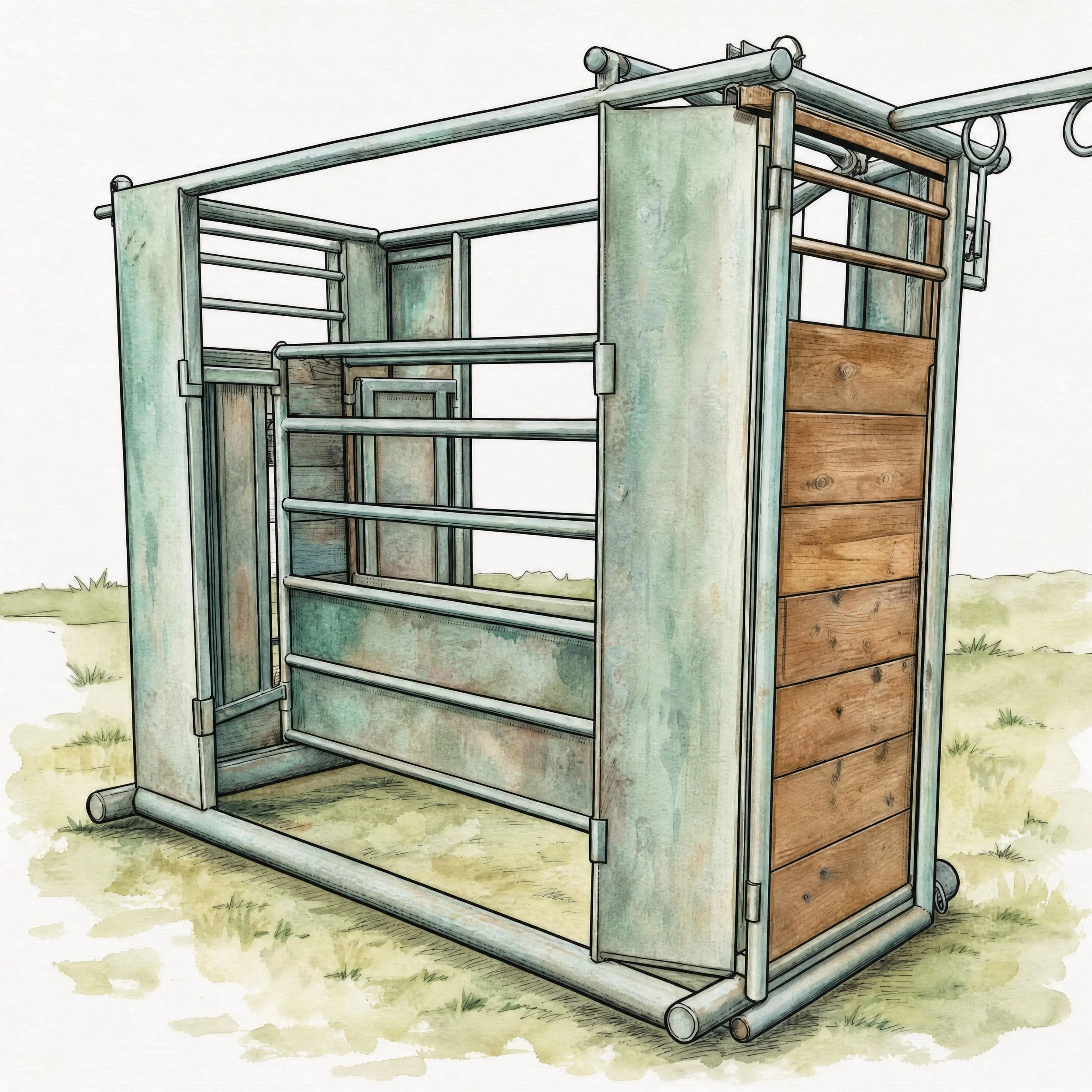
Here at Karma Ranch, we currently use a GL Horsemanship Equine Squeeze Chute to safely provide veterinary and farrier care for our wild and unhandled equines. We chose this chute specifically because it was designed by a horseman with rescues and sanctuaries in mind—built to ensure that no horse in sanctuary care ever goes without necessary medical or hoof attention due to handling challenges.
While it doesn't tilt, this chute is an absolute game-changer. Obviously, if a large rescue has the financial backing to afford a $50,000 - $80,000 hydraulic tilt chute, that’s incredible. But for the vast majority of smaller rescues and sanctuaries, that price point simply isn't realistic. The GL Horsemanship equine squeeze chute offers an accessible, remarkably fair price point without sacrificing safety or quality.
Most importantly, it is specifically engineered for a horse's body. Attempting to run a Mustang through a standard cattle chute can be extremely dangerous due to the stark differences in equine versus bovine anatomy, movement, and flight responses. For any sanctuary looking for a safe, humane, and financially accessible solution for unhandled equines, we cannot recommend the GL Horsemanship Equine Squeeze Chute enough.
Industry Benchmarks: No Scale Is an Excuse
If you ever wonder whether routine hoof care is possible on a massive scale, look to organizations like Skydog Sanctuary in Oregon.
Skydog manages hundreds of wild Mustangs and burros across 9,000 acres. Despite operating on thousands of acres of rugged terrain, they do not rely only on "natural wear" to take care of their herds. They maintain three hydraulic tilt chutes specifically designed for wild equines, ensuring that every horse requiring hoof trimming or medical intervention gets it safely and regularly.
If a 9,000-acre sanctuary can track, handle, and trim wild horses across thousands of acres, a sanctuary on 20, 40, or 250 acres has no excuse for skipping basic farrier care.

Red Flags & The Illusion of Social Media
The animal rescue world is built almost entirely on public trust, donor generosity, and emotional connection. People pour their hard-earned money, time, and heart into supporting what they believe are safe havens—places where forgotten, abused, or wild animals are given a second chance and held to the absolute highest standard of care.
When a donor clicks "subscribe" or sends a monthly contribution to a rescue, they aren't just sending money; they are placing their trust in the humans running the facility. They trust that behind the fences, real work is happening. They trust that when an animal is in pain, a vet is called. They trust that when hooves grow long, a farrier is scheduled.
Unfortunately, there is a massive, quiet, and deeply disturbing divide in the sanctuary world between two very different types of organizations: those sanctuaries that operate with genuine, ground-level accountability, and those that hide behind curated social media feeds and beautiful websites.
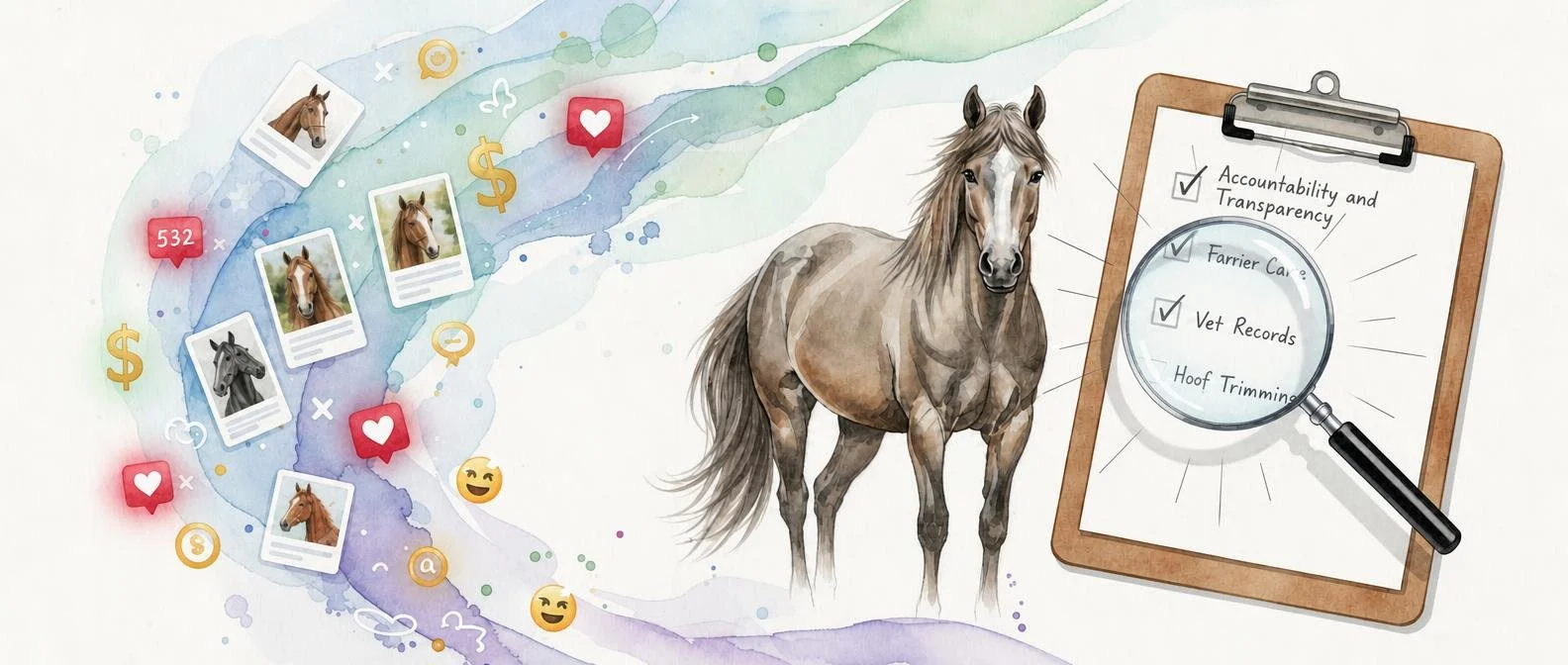
It has become painfully easy in the modern rescue landscape to create the illusion of an equine paradise. A crisp camera lens, a golden-hour sunset, and a sweeping video of Mustangs running across a grassy ridge can hide a mountain of quiet neglect. Social media algorithms reward dramatic rescue stories and dreamy, romanticized clips of "wild horses living free." They do not reward photos of a farrier covered in dirt holding a foot for forty-five minutes, or a breakdown of the monthly veterinary bills required to keep a herd sound and pain-free.
Because of this, far too many organizations pour their energy into media management rather than animal management. They market the fantasy of the "untouched wild horse" because it sells, while completely ignoring the unglamorous, expensive, and physically demanding reality of caring for domestic horses.
When a website highlights pristine views and heart-wrenching rescue narratives but remains dead silent on routine health maintenance, donors are left completely in the dark. They assume that because a sanctuary has tens of thousands of followers, beautiful branding, and a tax-exempt status, the animals are being cared for. But polish is not proof of care. High-resolution photos do not trim hooves. And a beautiful mission statement on a webpage will never compensate for a total lack of basic medical stewardship on the ground.

Calendar pages turn, but basic care never comes.
When this story was first shared with me about a year ago, that horse had spent 13 years without human touch, veterinary evaluation, or a farrier trim. Doing the math today, that timeline has officially reached 14 full years—spanning from 2013 to 2026. This graphic represents those 14 long years of quiet, continuous neglect, all passed off as "free-choice" sanctuary care behind a perimeter fence.
The 13 Year Wake-Up Call
I remember a conversation I had with another sanctuary founder that completely altered my perspective on how deep this problem runs in the rescue community.
We were discussing herd management, and she admitted to me that she had a horse on her property that she had not touched once in 13 years.
And please note: she didn't say this with hesitation or regret. She told me proudly. She was genuinely proud that, because this horse didn't want human contact, she had allowed them to live for 13 full years on her sanctuary without ever being touched. In her mind, withholding all human contact and handling for over a decade meant she had given this horse a life as close to "living in the wild" as possible.
I sat there listening, and it took everything in me to bite my tongue.
I wanted to scream. I was completely appalled, but I just had to sit there and absorb the absolute absurdity of what she was bragging about. Let the weight of that sink in for a moment.
If a horse has not been touched in 13 years, that means for over a decade:
That horse has never received a farrier trim.
That horse has never had a vet evaluate their teeth, float sharp enamel points, or check for painful mouth ulcers.
That horse has never had basic physical health checks, bloodwork, or routine preventative care.
That isn't wild preservation—that is a decade-plus of total domestic abandonment under the banner of "sanctuary."
And here is the most disturbing part: if you looked at that sanctuary’s website or scrolled through their social media, you would never in a million years know. You would see sweeping photos of horses grazing against mountain backdrops, heartwarming captions about giving animals "their freedom back," and polished donation buttons. You would see a postcard. You wouldn't see the unseen physical toll of thirteen years without basic medical care.
What Donors and Followers Must Ask
This is why transparency isn't just a buzzword; it’s a life-or-death ethic in animal welfare. When sanctuaries don't talk about the hard, unglamorous work or actively hide it, it sets a dangerous precedent for the entire rescue movement.
If you follow, support, or donate to an equine rescue or sanctuary—especially one specializing in wild Mustangs or burros—here are the red flags you need to watch for:
🚩 Complete Silence on Farrier & Veterinary Care: Routine care isn't always glamorous or viral-worthy, but it is the literal foundation of genuine sanctuary work. If an organization posts endless footage of horses running through fields but never shares farrier visits, veterinary procedures, or handling updates, you have to ask yourself why. (For example, there are large Mustang rescues in places like Texas that show hundreds of wild horses but never once share veterinary or farrier care—that silence should be a massive red flag to any donor.)
🚩 The "Natural Wear" Excuse: If a founder claims their horses "don't need farrier care because they live naturally on rocks," this indicates either a fundamental ignorance of equine biomechanics or an intentional excuse to cover up an inability to handle their animals.
🚩 Defensiveness Around Direct Questions: Ethical sanctuaries welcome questions about their standard of care. If asking, "How do you handle hoof care for your wild horses?" results in deleted comments, blocked accounts, or defensive personal attacks, that isn't a founder protecting their privacy—that is an organization hiding their lack of care.

A Personal Note from the Founder
I chose to write this piece because equine stewardship is not just a theoretical concept to me—it is my daily life, my passion, and a deeply personal responsibility.
Every single word in this article comes directly from real, hands-on experience in the trenches. It comes from navigating the intense reality of providing hoof care to wild, unhandled horses like Aurora, hunting down safe infrastructure, and realizing just how difficult—yet completely necessary—it is to find specialized equipment like an equine squeeze chute.
It comes from the sickening shock of standing face-to-face with another sanctuary founder and hearing her casually admit that a horse on her property hadn't been touched once in thirteen years.
It comes from watching massive, multi-million-dollar Mustang rescues in Texas rake in millions in donations and hundreds of thousands of dollars go directly to CEO salaries while providing zero public accountability, zero transparency, and zero proof of veterinary or farrier care for the hundreds of wild horses sitting on their land.
The rescue world can be alarming, frustrating, and, at times, deeply heartbreaking. But looking away solves nothing.
I’m not sharing these perspectives to point fingers, stir up drama, or call out names. I’m sharing them because the problem is real, the animals are suffering in silence, and our community desperately needs a higher standard.
By peeling back the curtain on the quiet reality of equine care, my hope is to bring true awareness to donors, educate fellow caregivers, and ensure that every wild Mustang and burro brought into captivity receives the dignity, respect, and medical stewardship they deserve.
Thank you for caring enough to ask the hard questions and for supporting real, transparent sanctuary work.
For the horses, and in the relentless pursuit of animal welfare,
Noelle Lynne