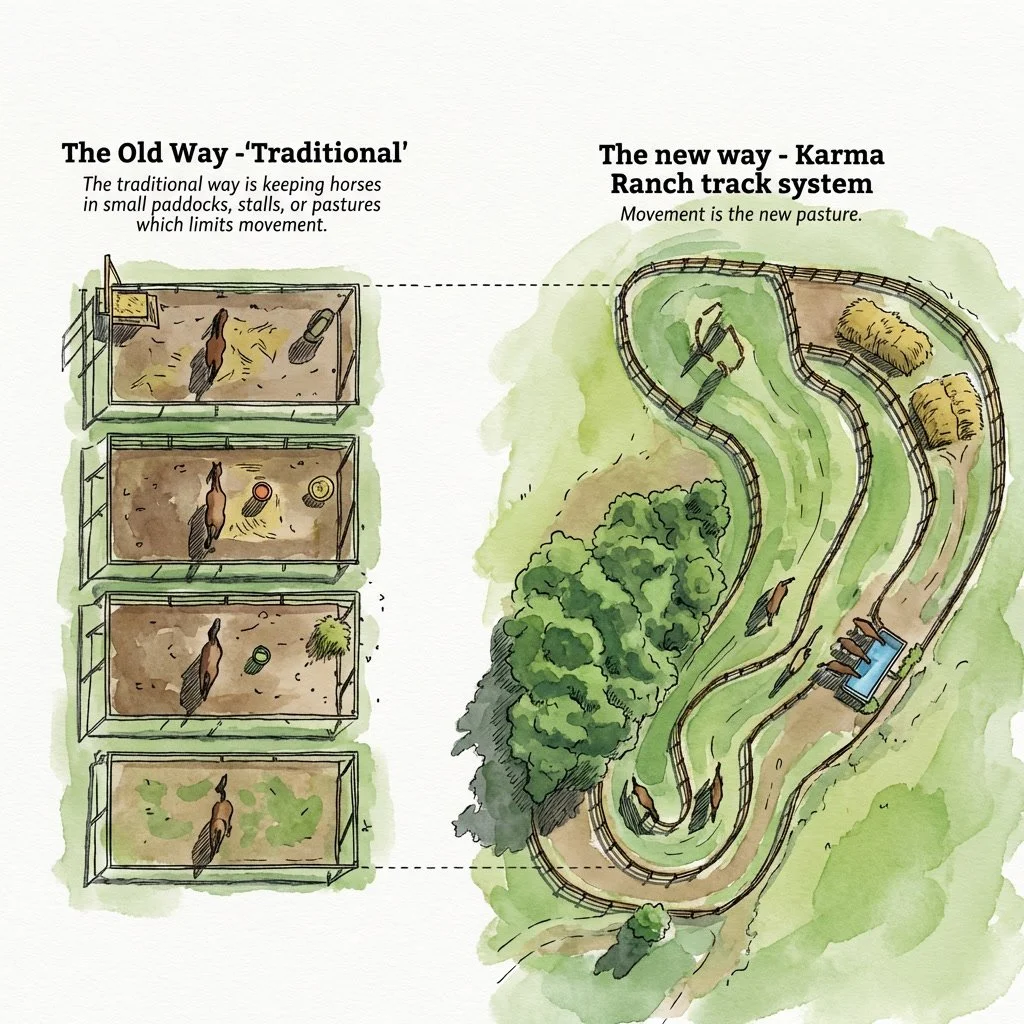
The Blueprint: Why We Use the "Movement Cure"
If you were to look at a map of a traditional horse ranch, you would see a series of square green boxes. In these boxes, horses often stand still for hours, waiting for their next meal. But when you look at the future map of Karma Ranch Sanctuary & Horse Rescue, you will see something entirely different: a vast, winding network of "tracks" that snake through 250 acres of Montana prairie.
This is the Paddock Paradise system—a concept pioneered by Jamie Jackson that we will scale for a herd of 95.
A track system is designed to trigger a horse’s most basic biological drive: the need to move. By placing water at one end of a mile-long loop, minerals at another, and varied forage in between, we create a landscape that "tricks" the horse into traveling 10 to 15 miles a day—just as their wild ancestors did.
At Karma Ranch, the track will be the heartbeat of our sanctuary. It is where the "Movement Cure" happens. It isn't just a fence; it is a tool for physical rehabilitation, mental stimulation, and ecological restoration.
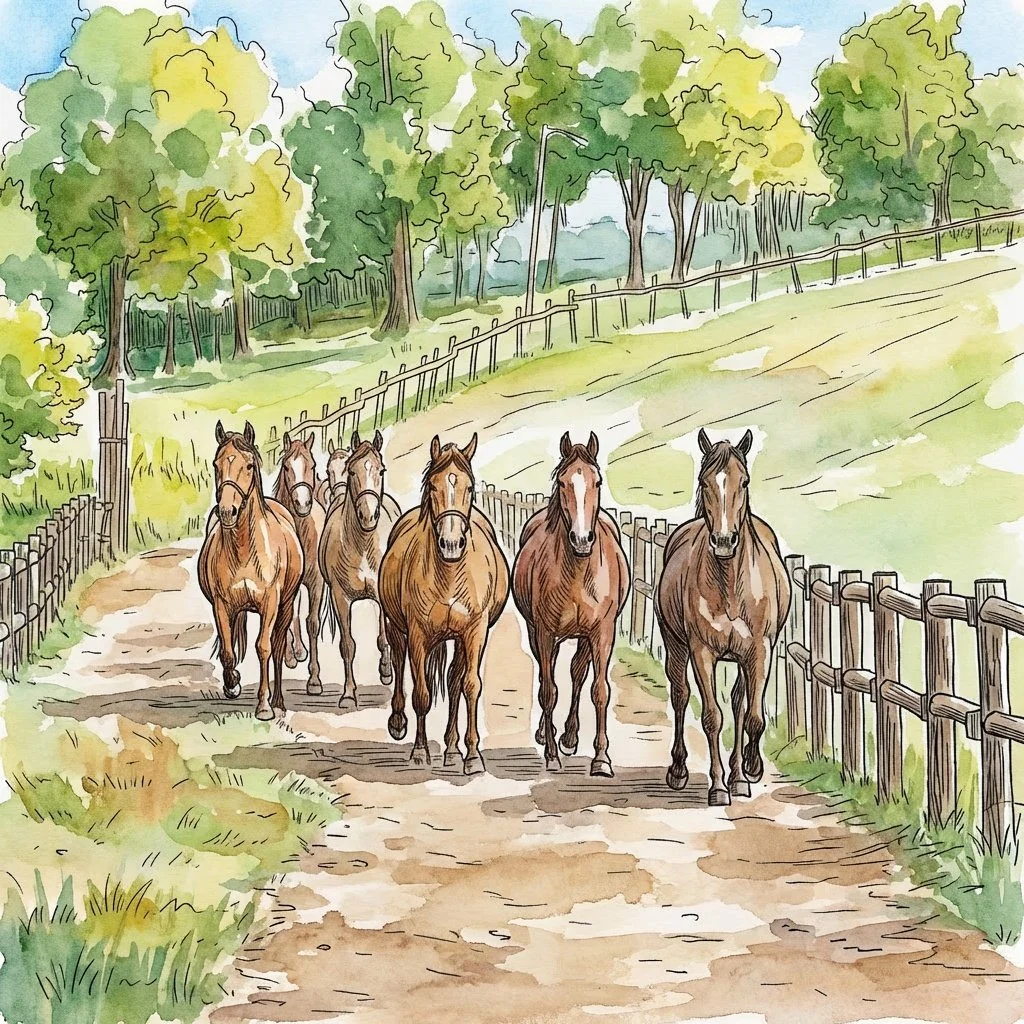
The Top 4 Benefits of the "Movement Cure"
A track system (Paddock Paradise) isn't just a different way to build a fence; it is a fundamental shift in how we approach equine biology. By replacing the stagnant square paddock with a dynamic perimeter, we unlock several critical health benefits that are often missing in modern horse keeping.
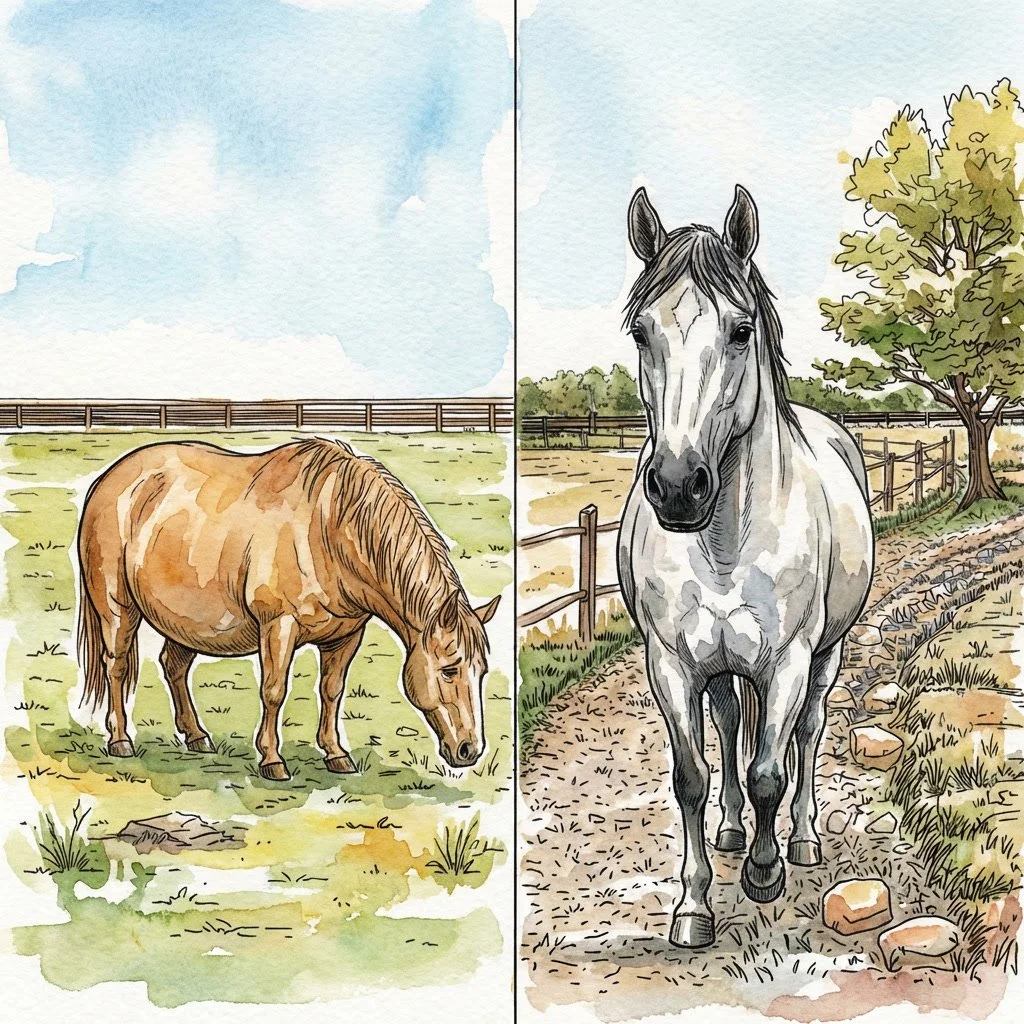
1. Metabolic Health and Weight Management
From stagnant to thriving: The visual difference between a high-sugar sedentary lifestyle and the natural conditioning provided by a movement-based track system.
From Stagnation to Stability: Reversing the Obesity Epidemic
Domestic horses are currently facing a critical obesity epidemic, which has led to a dangerous rise in metabolic disorders like Equine Metabolic Syndrome (EMS) and Laminitis. In a traditional, small-acreage pasture, a horse’s movement is often limited to the distance of the next blade of grass, creating a sedentary lifestyle that is incompatible with their biological design. On a Paddock Paradise track system, we break this cycle by restricting lush grazing and replacing it with varied foraging stations, strategically forcing the horse to "commute" between water, minerals, and hay.
This design encourages consistent, low-intensity movement that mimics the 10–20 miles a wild horse travels daily, a crucial factor in keeping insulin levels stable and weight in check. By utilizing varied terrains and textures, we also engage the "hoof pump" mechanism, ensuring that every step taken toward a new foraging station is also a beat for the horse's circulatory system. For our future herd on 250+ acres, this infrastructure is not just a layout; it is a life-saving intervention that transforms the landscape into a tool for metabolic health and permanent recovery.

2. Superior Hoof Health through Stimulation
The hoof is far more than just a structural base; it is a vital circulatory pump.
Every time a horse takes a step, the hoof expands and contracts, which aids in blood circulation by pumping blood back up the leg toward the heart. On a Paddock Paradise track system, we can strategically introduce varied terrains—such as pea gravel around water troughs, sand pits for rolling, or rocky paths—to maximize this biological function.
This constant contact with different textures and surfaces naturally wears down the hoof wall and toughens the frog and sole, mimicking the self-trimming effect seen in wild herds. For the future 95 horses of the Karma Ranch herd, this "self-trimming" environment is essential for rehabilitating those coming from years of neglect. By providing a landscape that encourages continuous movement across diverse ground, we aren't just managing their hooves; we are fueling their entire circulatory system and restoring their foundational health from the ground up.
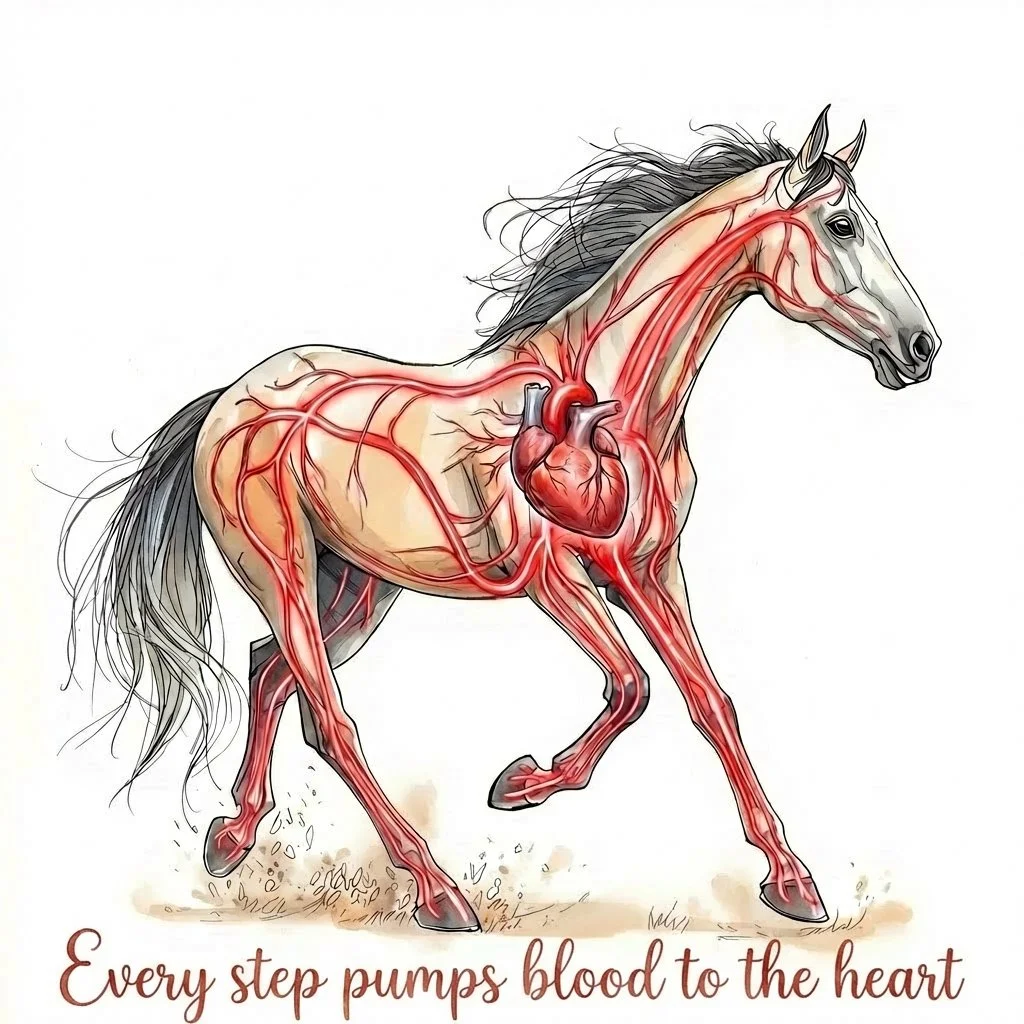
A horse has five hearts…
One in their chest and four in their hooves. The frog of the hoof acts as a natural pump; with every step, the pressure and release circulate blood back up the legs to the heart. This is why movement isn't just a luxury—it's a biological requirement for a healthy circulatory system.
3. Natural Mental Enrichment

A landscape designed for curiosity. Track systems use varied textures, obstacles, and bridges to keep the mind engaged and the body in motion.
Boredom is the root of many "stable vices," such as cribbing, weaving, and wood-chewing. These behaviors are often the result of a horse being unable to express their natural instincts. A track system provides a "job." Whether it’s navigating a new path, browsing on native Montana shrubs we’ve planted along the fence line, or simply interacting with the herd in a forward-moving flow, the track keeps their minds engaged. It turns their living space into a giant puzzle that rewards movement.
4. Social Harmony and Herd Dynamics: The Geometry of Peace
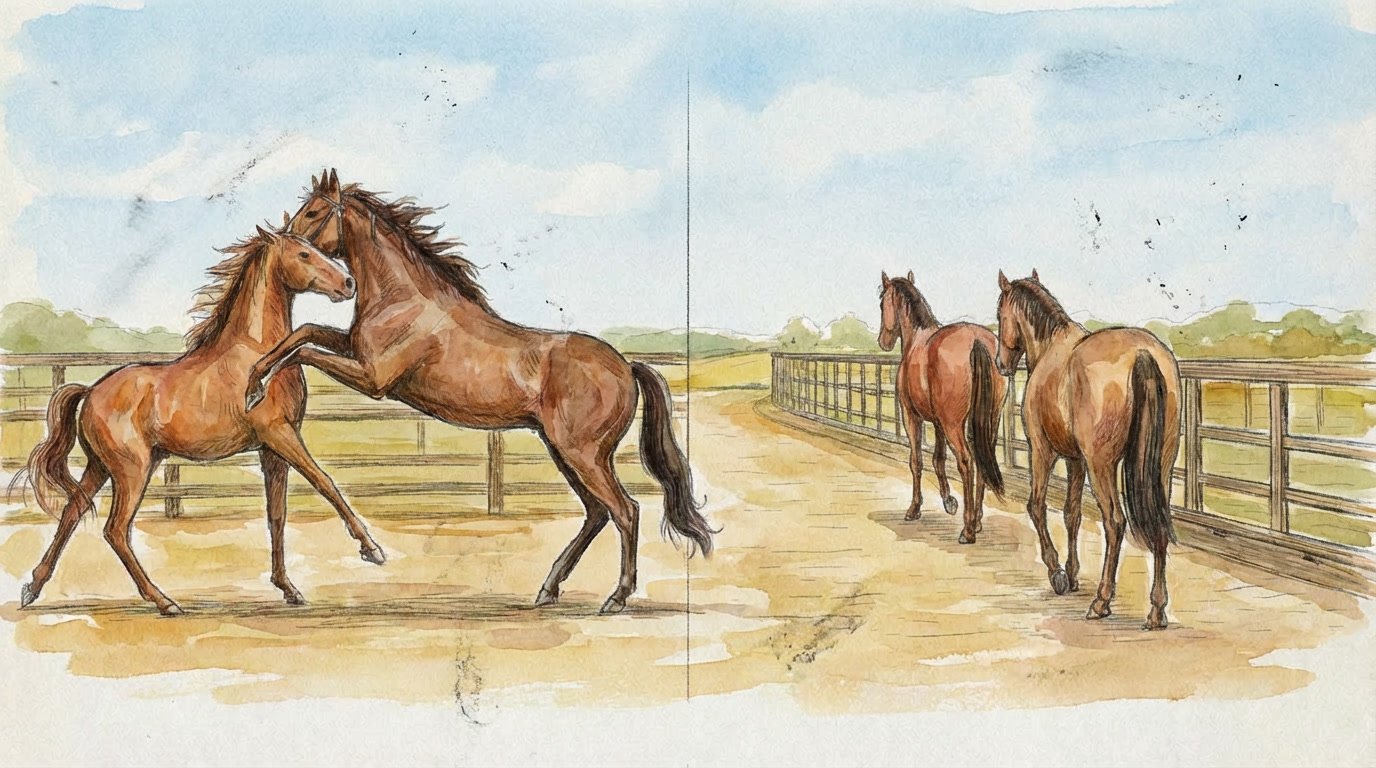
In a traditional square paddock, the lack of defined pathways often creates social friction; a dominant horse can easily corner a more submissive one, leading to defensive kicks, high cortisol levels, and chronic stress. The linear nature of a track system fundamentally changes this social dynamic. Because the track is designed to be narrow—typically 10 to 15 feet wide—it naturally encourages horses to move in a "follow-the-leader" sequence rather than confronting each other head-on. This flow promotes a matrilineal-style movement that strengthens herd bonds and reduces social tension, creating a peaceful environment where even the most traumatized rescued residents can feel secure.
This architectural approach to herd management is essential for the social healing we prioritize at Karma Ranch. By removing corners and open-field standoffs, we allow for the development of stable social circles where "aunties" like Luna can help guide and protect the younger or more vulnerable members like Kale. For our future herd across 250+ acres, this system ensures that movement isn't just about physical fitness, but about fostering a communal culture where every horse—regardless of their past—can find their place within a safe and supportive social fabric.
The Horizon of Healing

Freedom for the Herd: A Vision of Regenerative Sanctuary.
At the end of the day, a track system is more than just a tool for physical rehabilitation; it is a commitment to the Dignity of Choice. It acknowledges that a horse’s spirit is tied to their ability to move, explore, and exist within a herd. For the 95 rescue horses of Karma Ranch, this "Movement Cure" is the difference between surviving in a stall and thriving on the landscape. As we move toward securing our 250+ acre sanctuary, these tracks will become the arteries of our regenerative mission—healing the soil of Montana while restoring the bodies of the horses who call it home. We aren't just building a ranch; we are building a legacy where every step a horse takes is a step toward wellness.
How this ties into the Karma Ranch Mission

At Karma Ranch, our 250-acre track isn't just a fence line—it’s a reforestation corridor. By planting 14,000 native trees along our track systems, we are creating a "living barn." These trees provide:
Natural Windbreaks: Essential for the harsh Montana winters.
Browsing Opportunities: Allowing horses to forage on willow, aspen, and other native species to balance their own minerals.
Soil Regeneration: The movement of the horses' hooves actually helps press seeds into the soil and aerate the ground, which, combined with our reforestation efforts, heals the land as much as it heals the horses.

Q: Can rescue horses with behavior issues live in a herd? A: Yes. At Karma Ranch, we use a 250-acre track system and the "Founding Herd" to provide social mentorship, which naturally reduces aggression and anxiety in rescue horses.
Q: How does space help a horse's nervous system? A: Large acreage provides "flight space." When a horse knows they can move away from a perceived threat, their cortisol levels drop, allowing them to shift from survival mode to healing.