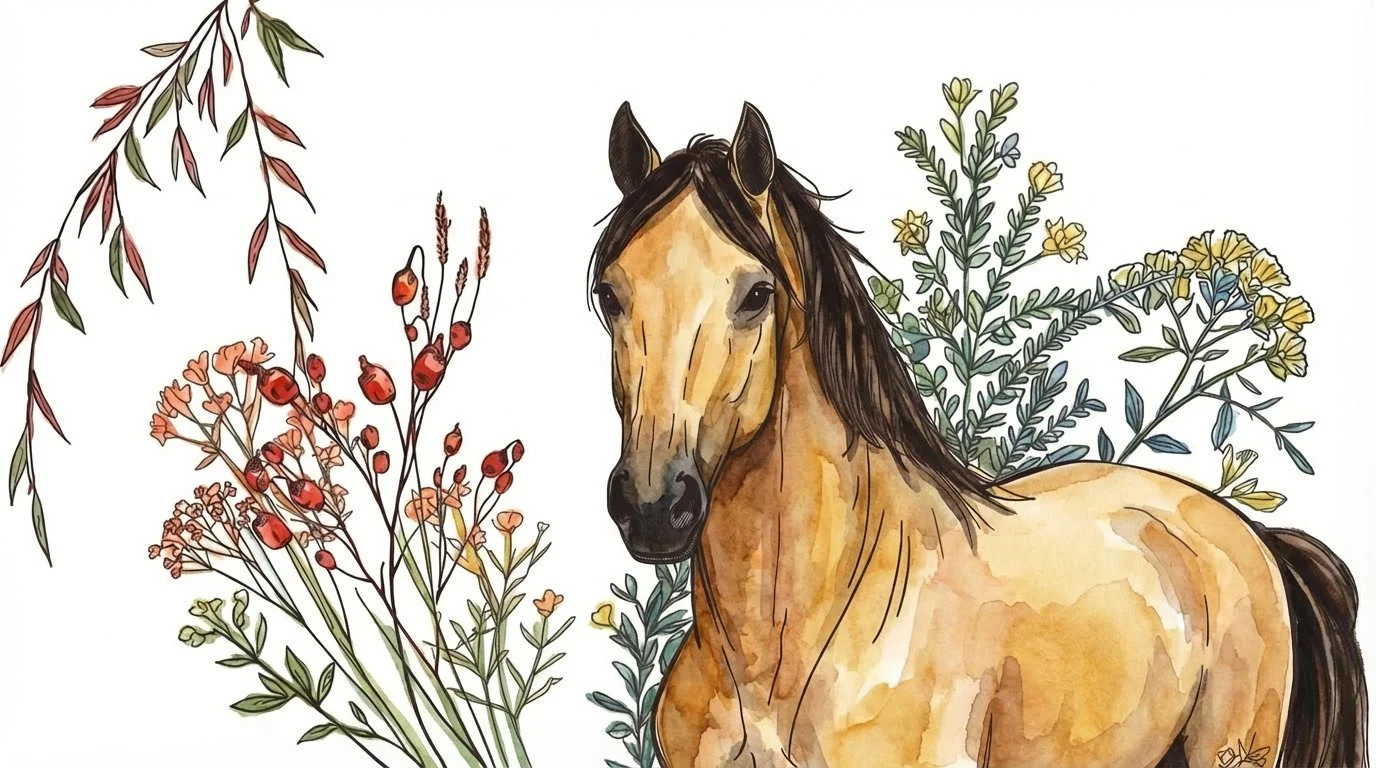
At Karma Ranch, we don't just see a 250-acre landscape; we see a biological medical center. For our herd of rescue horses—many will arrive with the physical and emotional scars of neglect—healing begins from the ground up. By moving away from traditional "lawn-style" pastures and toward a Regenerative Living Pharmacy, we are allowing the land to heal the horse, and the horse to heal the land.
The 4 Pillars of the "Living Pharmacy"
1. Zoopharmacognosy: The Power of Choice
Zoopharmacognosy is the process by which animals self-medicate by selecting specific plants to balance their health. Rescued horses often arrive with systemic inflammation or digestive upset. By planting a diverse range of native species along our track system, we allow the horses to follow their instincts. A horse with joint pain may seek out Willow (containing salicin, the precursor to aspirin), while a horse needing an immune boost may browse on Rosehips or Hawthorn.

Monoculture pasture on the left. Diverse Pasture on the right.
2. Diverse Forage vs. Monoculture Pastures
Most modern horse pastures are "monocultures"—single-species grass fields that are the equine equivalent of a bread-only diet. Our reforestation plan introduces structural and nutritional diversity.
Protein & Minerals: Trees like Aspen and Cottonwood provide deep-rooted minerals that surface-level grasses can't reach.
Gut Health: Browsing on bark and woody stems provides "long-stem fiber" and tannins that support a healthy equine microbiome and help prevent ulcers.

3. Sheltering the Spirit (The Windbreak Effect)
In the harsh Big Sky climate of Montana, trees are more than food; they are medicine for the nervous system. A horse that is constantly fighting 40mph winds or scorching sun is a horse in a state of high cortisol. By planting 14,000 native trees as multi-layered windbreaks and "shelterbelts," we create micro-climates where the herd can rest. This physical protection allows their bodies to shift from "survival mode" to "healing mode."
4. The Functional Prairie (Mixed Grasses as a Daily Multivitamin)
In a traditional horse pasture, you often find one or two types of grasses that were bred for the purpose of rapid weight gain in cattle. At Karma Ranch, our fourth pillar is forage diversity. By mixing native grasses (like Mountain Brome, Bluebunch Wheatgrass, and Little Bluestem), we create a "nutritional safety net" for the herd.
Nutritional Completeness: Just as humans shouldn't eat only kale, horses shouldn't eat only one type of grass. Different grasses have different "mineral profiles." Some are higher in magnesium (essential for nervous system regulation), while others are richer in silica (crucial for tendon and ligament strength). A mixed-grass pillar ensures that while our rescue horses move along the track, they are naturally balancing their own mineral deficiencies step-by-step.
Seasonal Resilience (The "Green Wave") A monoculture pasture often dies off all at once during a Montana drought or a cold snap. In our mixed-grass, we utilize:
Cool-Season Grasses: Provide high-energy forage in early spring and late fall.
Warm-Season Grasses: Thrive in the heat of July, providing "standing hay" when other plants go dormant. This variety ensures the soil is always covered and the horses always have "living" food, regardless of the weather.
The Karma Ranch Plant List: 8 Native Species for the Living Pharmacy
When we plant 14,000 trees, we aren't just choosing based on what grows fast. We are selecting species that have served as the "medicine chest" for wild horses for millennia.
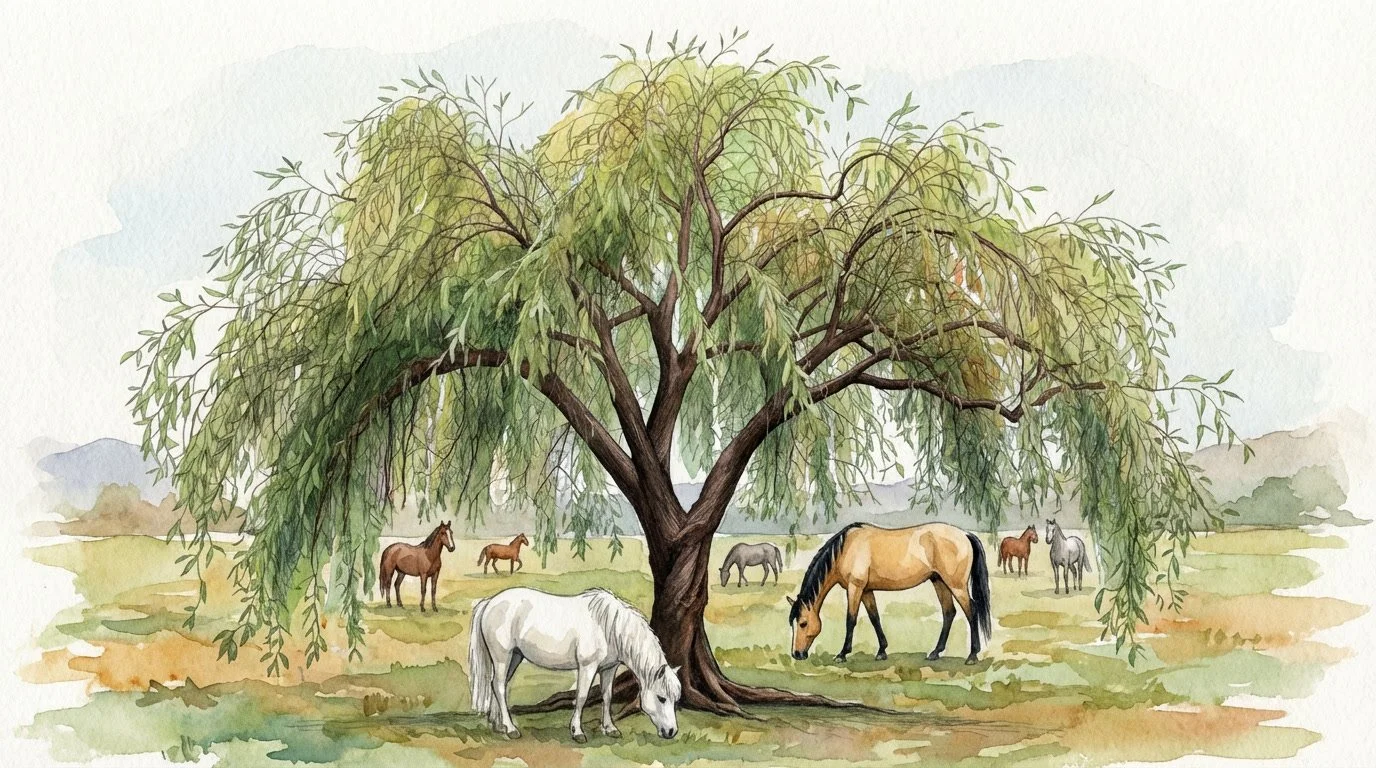
1. Willow (Salix spp.)
The Equine Benefit: Natural Pain Relief.
How it works: Willow bark contains salicin, which the horse's body metabolizes into salicylic acid (the active ingredient in aspirin). It is the ultimate "natural anti-inflammatory" for senior horses or those with chronic joint stiffness.
Soil Benefits: Willows are world-renowned for their ability to perform phyto-remediation aka soil cleansing. Their roots act like a high-powered filter, absorbing heavy metals and excess nutrients (like nitrogen or phosphorus from horse manure) that might otherwise leach into the groundwater. At Karma Ranch Sanctuary & Horse Rescue, planting Willows ensures that the runoff remains clean, protecting the well water and the local Montana water table.

2. Rosehip (Rosa woodsii)
The Equine Benefit: Immune Support & Hoof Health.
How it works: Native Wood’s Rose produces "hips" that are incredibly high in Vitamin C and Biotin. Horses often seek these out in the autumn to prepare their immune systems for winter and to support strong, resilient hoof growth.
Soil Benefits: Rosehips form strong symbiotic relationships with mycorrhizal fungi in the soil. These fungi create a massive underground network that helps all the surrounding plants exchange water and nutrients more efficiently. By planting Rosehips, you are effectively building the "internet of the soil" this helps Karma Ranches 250 acres stay resilient during Montana droughts.
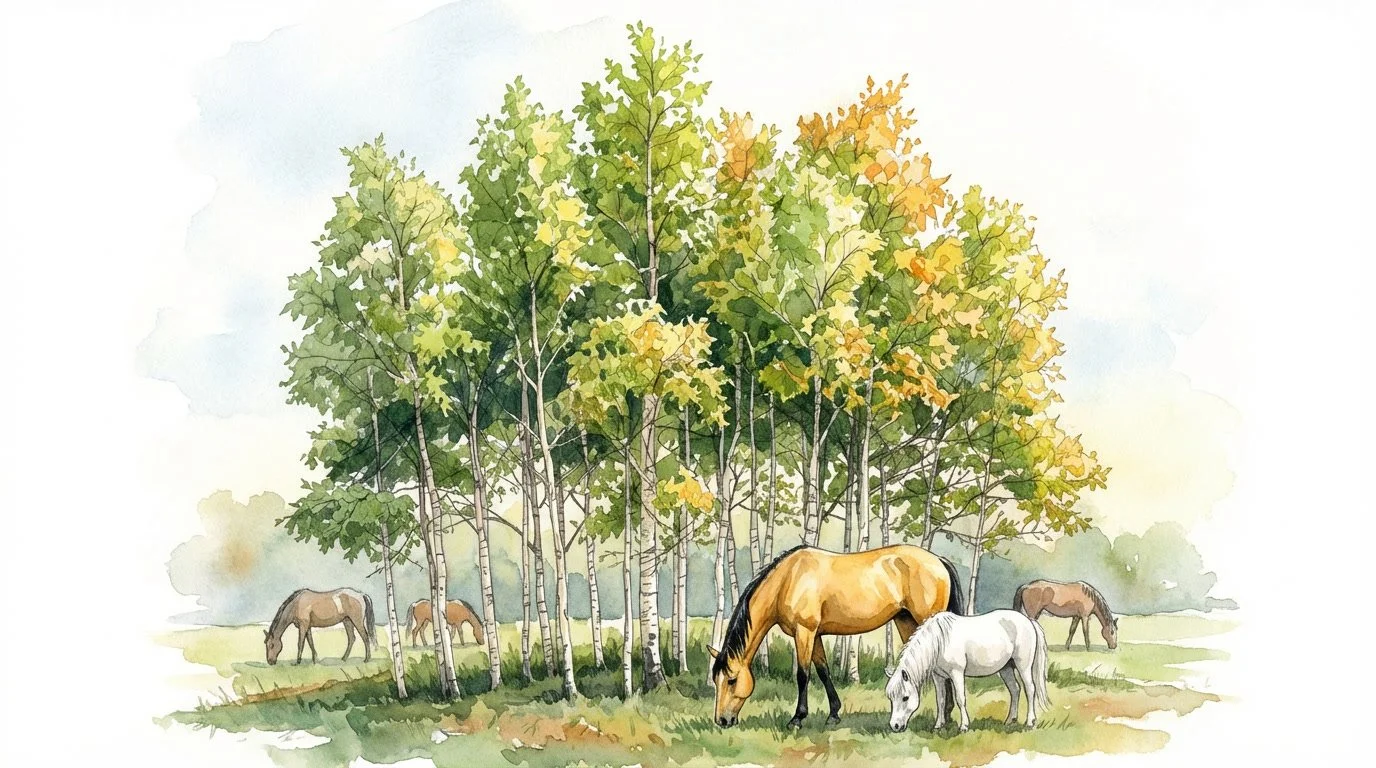
3. Quaking Aspen (Populus tremuloides)
The Equine Benefit: Digestive Aid & De-worming Support.
How it works: The bark of the Aspen tree is rich in tannins and bitter compounds that act as a natural tonic for the digestive system. Horses often browse the bark to help balance gut pH and deter internal parasites.
Soil Benefits: Aspens are a "pioneer species." They are often the first trees to grow back after a fire or significant land disturbance. They specialize in soil building; their leaves are rich in calcium and magnesium, and because they drop a heavy "litter" of leaves every autumn, which creates a thick layer of nutrient-dense humus. Aspens will rapidly improve the quality of the topsoil for native grasses.
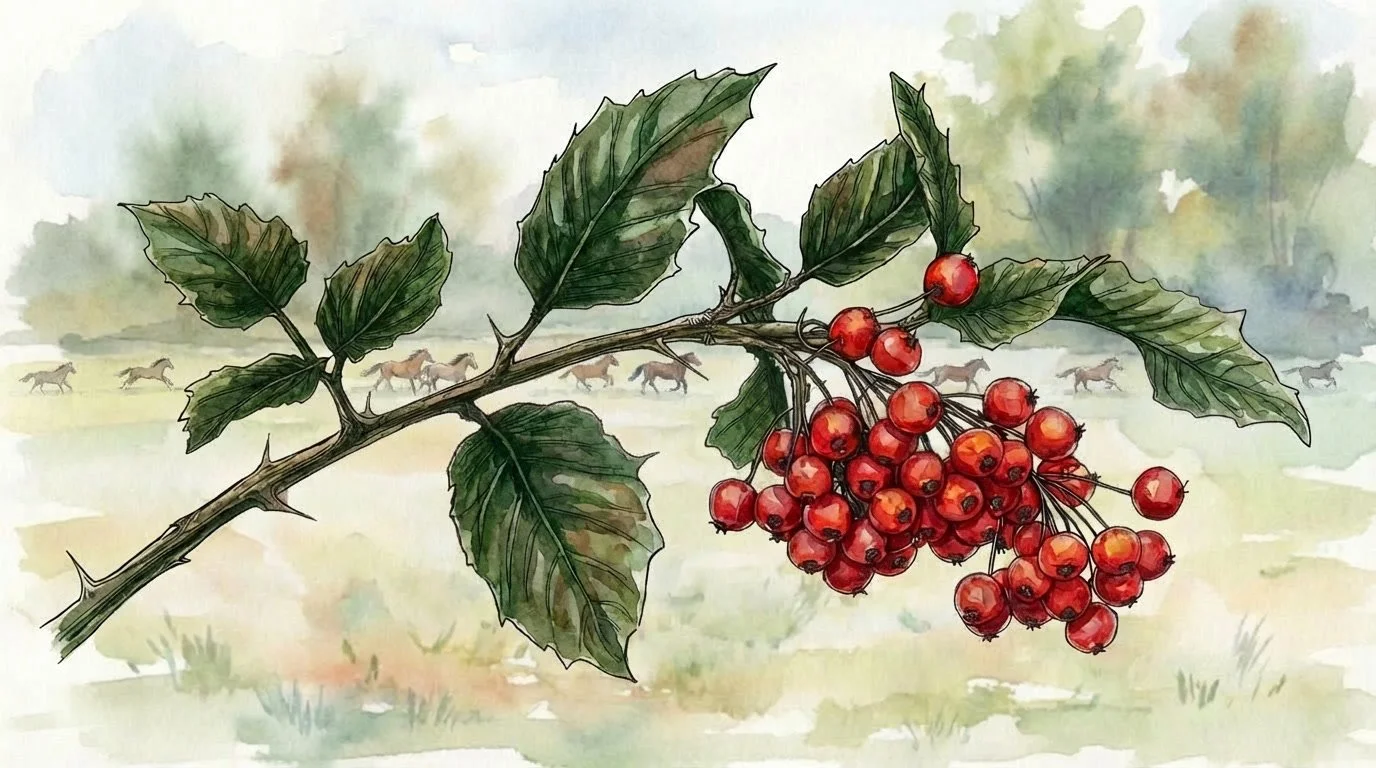
4. Hawthorn (Crataegus spp.)
The Equine Benefit: Circulatory Health.
How it works: Known as "the heart herb," Hawthorn berries and leaves support blood flow and cardiovascular health. For a horse in a track system, healthy circulation is the key to maintaining a robust "hoof pump."
Soil Benefits: Think Deep-Soil "Bio-Drilling." Hawthorns have incredibly tough, woody taproots that can deeply penetrate compacted soil layers (aka hardpan) that many grasses cannot. This "bio-drilling" creates channels for air and water to reach deep into the earth. For our track system, this is essential because it prevents the soil from becoming a "brick," allowing the land to remain porous and healthy even when we have 95 horses moving over it.

5. Narrowleaf Cottonwood (Populus angustifolia)
The Equine Benefit: Skin Healing & Trace Minerals.
How it works: As a deep-rooted species, the Cottonwood pulls minerals from deep within the Montana soil into its leaves and twigs. The sticky buds are also rich in antimicrobial resins that horses sometimes use to help soothe internal inflammation.
Soil Benefits: Narrowleaf Cottonwoods have one of the highest transpiration rates of any native Montana tree. In areas of Karma Ranches 250+ acres many areas suffer from seasonal flooding or "boggy" patches during the spring thaw, the Cottonwood acts as a massive biological pump. It pulls water out of the saturated ground and releases it into the air, preventing the soil from becoming anaerobic (oxygen-deprived) and sour.
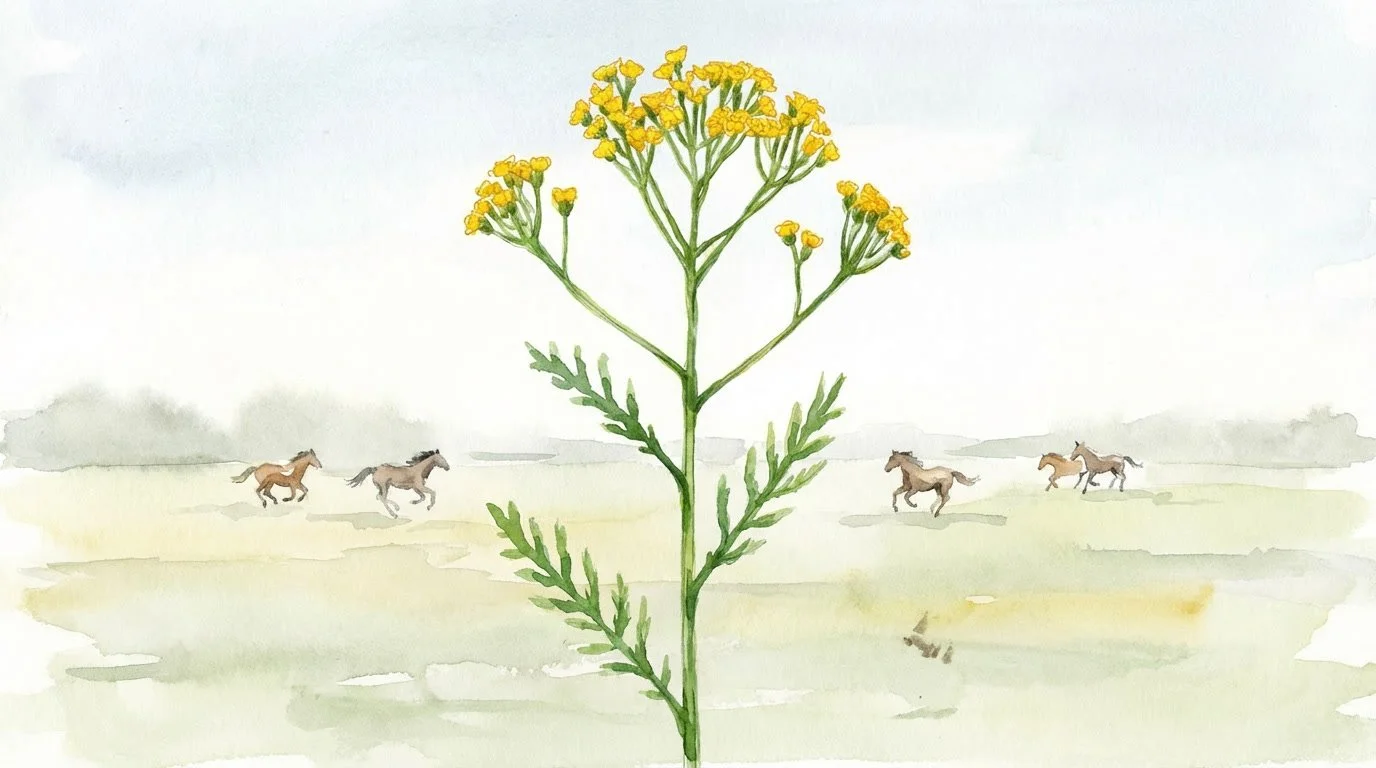
6. Yarrow (Achillea millefolium)
The Equine Benefit: Blood Health & Wound Healing.
How it works: Yarrow is a "styptic," meaning it helps regulate blood flow. In the wild, horses often seek out Yarrow if they have internal inflammation or minor skin irritations. Its feathery leaves are packed with flavonoids that support a healthy circulatory system.
Soil Benefit: It is a "dynamic accumulator." Its deep roots pull up nutrients like copper, phosphates, and potassium, making them available to the grasses growing nearby. It is also a magnet for beneficial pollinators like bees and butterflies.

7. Narrow-Leaf Echinacea (Echinacea angustifolia)
The Equine Benefit: The Natural Antibiotic.
How it works: Native to the Montana prairies, this "Purple Coneflower" is one of the most powerful immune-stimulants in the world. Horses will often browse the flower heads or roots if they feel a respiratory infection coming on. It helps the body fight off bacteria and viruses naturally.
Soil Benefit: This is a tough, drought-resistant perennial. Its presence at Karma Ranch Horse Sanctuary & Horse Rescue indicates a healthy, mature prairie ecosystem. It adds incredible beauty to the ranch for our off-grid guests while providing a "wellness boost" for the herd of rescue horses.

8. Sea Buckthorn (Hippophae rhamnoides)
The Equine Benefit: The Gastric & Coat Specialist
How it Works: Sea Buckthorn is incredibly rich in Omega-7 fatty acids, which are rare in the plant kingdom. These fatty acids are essential for maintaining and repairing mucous membranes.Many rescue horses arrive with gastric ulcers due to the stress of neglect and transport. Sea Buckthorn is nature’s "stomach soother." Browsing the leaves and berries helps coat the digestive tract, reducing inflammation and supporting gut lining recovery. Additionally, the high Omega content (3, 6, 7, and 9) produces a mirror-like shine on the coat and supports healthy skin in Montana’s dry air.
Soil Benefit: The "Arid Land Armor"
Nitrogen Fixation: Sea Buckthorn is a nitrogen-fixer. It takes nitrogen from the atmosphere and deposits it into the soil, acting as a natural fertilizer for your surrounding native grasses.
Drought & Salt Tolerance: It is a incredibly hardy shrub. In the high-desert plains of Montana, where the soil can be alkaline or saline, Sea Buckthorn thrives where other plants wither. Its deep, aggressive root system is perfect for reinforcing the outer edges of your track system.
Ethical Exception Sea Buckthorn is not native to the Montana landscape—hailing originally from the cold, high-altitude regions of Eurasia—it is an exceptional "naturalized" ally for our sanctuary. We have carefully selected it for its non-invasive nature and its unparalleled ability to survive in the harsh, alkaline soils of the Big Sky. While we prioritize native reforestation for 95% of our project, we believe Sea Buckthorn is an essential "specialist" for a rescue horse environment. Its unique ability to heal gastric ulcers and provide Omega-7 fatty acids offers a level of biological support that no other native shrub can match, making it a vital, safe, and hardy addition to the Karma Ranch medical toolkit.
The Foundation: 6 Deep-Rooted Native Grasses for Soil & Soul

1. Bluebunch Wheatgrass (Pseudoroegneria spicata)
Soil Benefit: The "State Grass of Montana." Its massive, fibrous root system can reach 6 feet deep, holding soil in place and preventing erosion.
Equine Benefit: It is a hardy "bunchgrass" that provides excellent winter forage. Because it grows in clumps rather than a thick carpet, it naturally encourages horses to move and "search" for food, preventing the mindless overgrazing found in lush paddocks.
2. Great Basin Wildrye (Leymus cinereus)
Soil Benefit: This is a "giant" among grasses, often growing 3–6 feet tall with roots that go several feet deep. It acts as a natural snow fence and windbreak at the ground level.
Equine Benefit: Because of its height, it provides "structural fiber." It’s a great "standing hay" for horses to browse on during the late fall, providing the roughage they need for gut warmth without the sugar spikes of spring grass.

3. Western Wheatgrass (Pascopyrum smithii)
Soil Benefit: This is a sod-forming grass with rhizomes (underground stems) that create a dense mat, perfect for the high-traffic areas of Karma Ranches Paddock Paradise track.
Equine Benefit: It is highly palatable but matures slowly, meaning its sugar content stays lower for longer periods compared to commercial "dairy-quality" grasses.
4. Little Bluestem (Schizachyrium scoparium)
Soil Benefit: Known for its striking blue-green summer color and reddish-gold winter hue. Its roots are incredibly dense and reach 5–8 feet deep, pulling up trace minerals like zinc and copper.
Equine Benefit: It’s a "warm-season" grass, meaning it grows best when other grasses go dormant in the heat of a Montana July. This ensures the herd has fresh, living nutrients even in the peak of summer.
5. Rough Fescue (Festuca campestris)
Soil Benefit: This grass is a champion of carbon sequestration. It builds deep, rich organic matter in the soil as its roots cycle through the seasons.
Equine Benefit: Fescue is the "candy of the prairie" for horses, but unlike "Kentucky 31" fescue, this native version is endophyte-free, making it safe for all members of the herd, including pregnant mares or those with sensitive hooves.
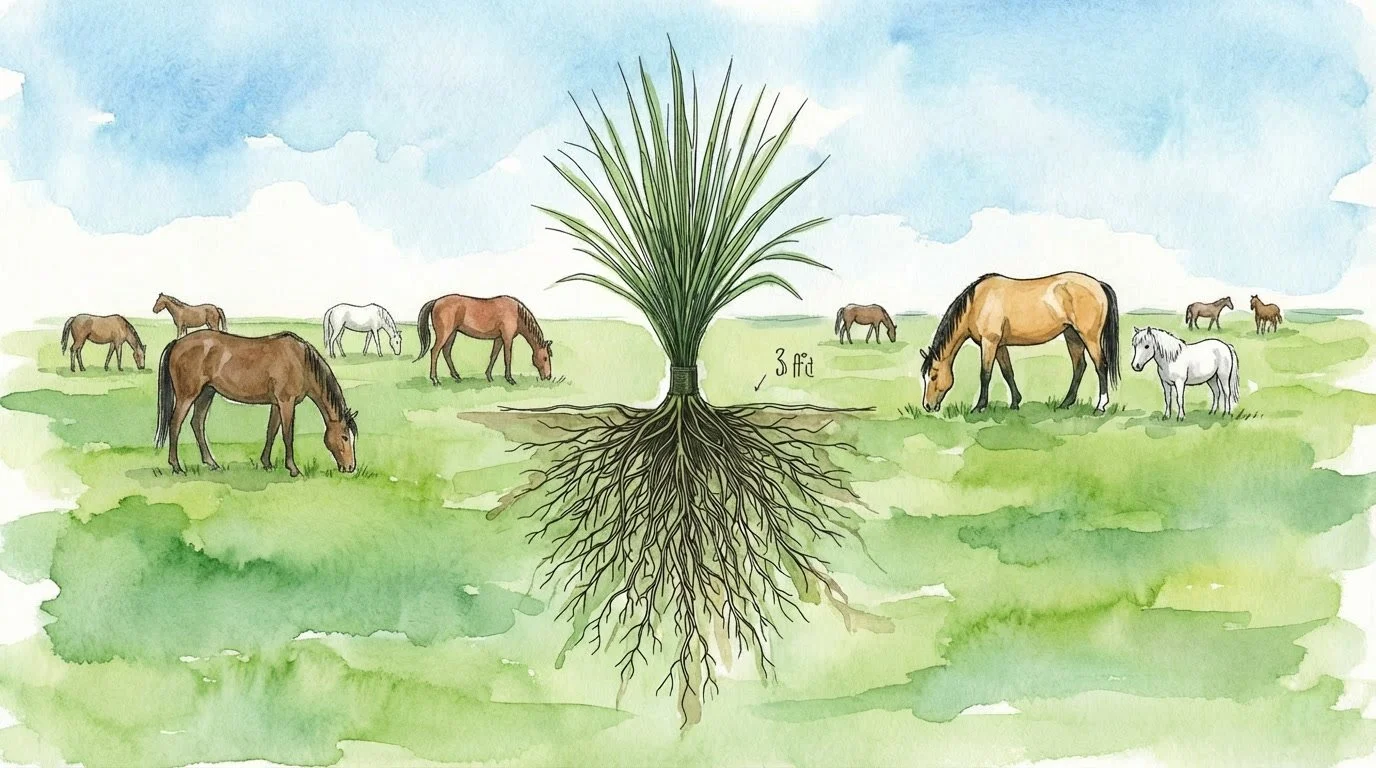
6. Mountain Brome (Bromus marginatus)
Soil Benefit: This is a "rapid-response" grass. It establishes very quickly on disturbed soil, making it the perfect first line of defense against erosion after Karma Ranch has finished construction on our track system and cabins. Its roots are aggressive and excellent at "opening up" compacted soil so other native seeds can take hold.
Equine Benefit: Mountain Brome is highly palatable and provides high-quality protein early in the season. Because it is a native species, it is much more "sugar-stable" than the invasive Smooth Brome, making it a safer choice for the metabolic health of our current rescue horses and our future rescue horses.
At Karma Ranch, we don't just see a field of grass. We see a complex, underground network of roots that stabilize our Montana soil and an 'above-ground' pharmacy that nourishes our herd. By moving away from monoculture hay and toward this six-species native mix, we are ensuring that the land heals the horse, and the horse—through their movement on the track—heals the land.

The Hoof-to-Soil Feedback Loop
In our 250-acre sanctuary, the horse is the gardener.
As the rescue herd moves along the track to find their medicine, their hooves act as natural aerators, pressing seeds into the earth and stimulating soil biology. This is the ultimate closed-loop: a self-sustaining ecosystem where the health of the horse and the health of the Montana soil are one and the same.