A Commitment to the End
The ultimate gift you can give a horse isn't a fancy stall or the most expensive tack; it is the simple, unwavering commitment to take care of them until the very end. In a world that too often views horses as tools or seasonal hobbies, the reality for many seniors is grim. Every year, thousands of horses find themselves standing in the dust of livestock auctions because they are no longer "useful" or can no longer be ridden. When a horse's utility fades, they often lose their value in the eyes of the market, and for many, the auction block is the first step toward a tragic end.
The heartbreaking truth is that no one—not a new owner, not a trainer, and not a trader—will ever love a senior horse as much as the person who bonded with them throughout their life. While a lucky few find their way to sanctuaries like Karma Ranch, the majority are not so lucky. They are dumped at a time when they are most vulnerable, often by the only families they have ever known. Making the choice to be your horse’s "forever" means promising that they will never have to face a cold auction ring or an uncertain future. It is a vow that their value is found in their soul, not their scoreboard.
However, keeping that promise requires more than just love; it requires a specialized strategy. As these horses enter their golden years, their bodies begin to change in ways that can be alarming for even the most experienced owners.
When the Buffet Isn't Enough

There is a specific kind of heartbreak in watching a senior horse stand over a pile of premium alfalfa, only to see their ribs begin to shadow and their topline sink. You’re providing the "buffet," yet they are losing the battle with the scale. For the senior horse, the struggle usually isn’t a lack of calories—it’s a crisis of nutrient absorption. As they enter their twilight years, the "engine" that once turned grass into muscle begins to wear down. To keep them "blooming," we have to stop thinking like hay-haulers and start thinking like nutritionists.
The most common mistake made during this "downturn" is reaching for a bag of heavy, grain-based concentrates. It feels logical: the horse is thin, so we feed "richer" food. However, a senior’s digestive tract is often too fragile to handle the massive glucose spikes and starch loads that come with traditional grains. These "empty" calories can lead to systemic inflammation, cresty necks, and even laminitis, all while failing to address the actual issue: a hindgut that can no longer extract life from long-stem hay. When we see weight loss, we shouldn't be looking for more grain; we should be looking for more accessible forage.
True success with a "hard keeper" comes from transitioning to a forage-based "complete" strategy. This means utilizing high-quality byproducts—like beet pulp, soy hulls, or alfalfa pellets—which are essentially "pre-chewed" fibers. These ingredients provide the same fermentable energy as pasture but in a form the senior’s compromised teeth and gut can actually process. By focusing on these digestible fibers rather than starch, we support the hindgut’s natural fermentation process without the metabolic risks of grain. On a ranch like ours, where the horses need to stay resilient across hundreds of acres, this forage-first approach is the only way to ensure they aren't just "full," but truly nourished.
The "Downturn" – Why Seniors Lose Weight
Dental Efficiency: The Lost Grind
Unlike human teeth, a horse’s teeth are "hypsodont," meaning they have a long reserve crown that slowly erupts throughout their life to compensate for the constant grinding of silica-rich grass. By the time a horse reaches their late 20s, they are often literally "running out of teeth."
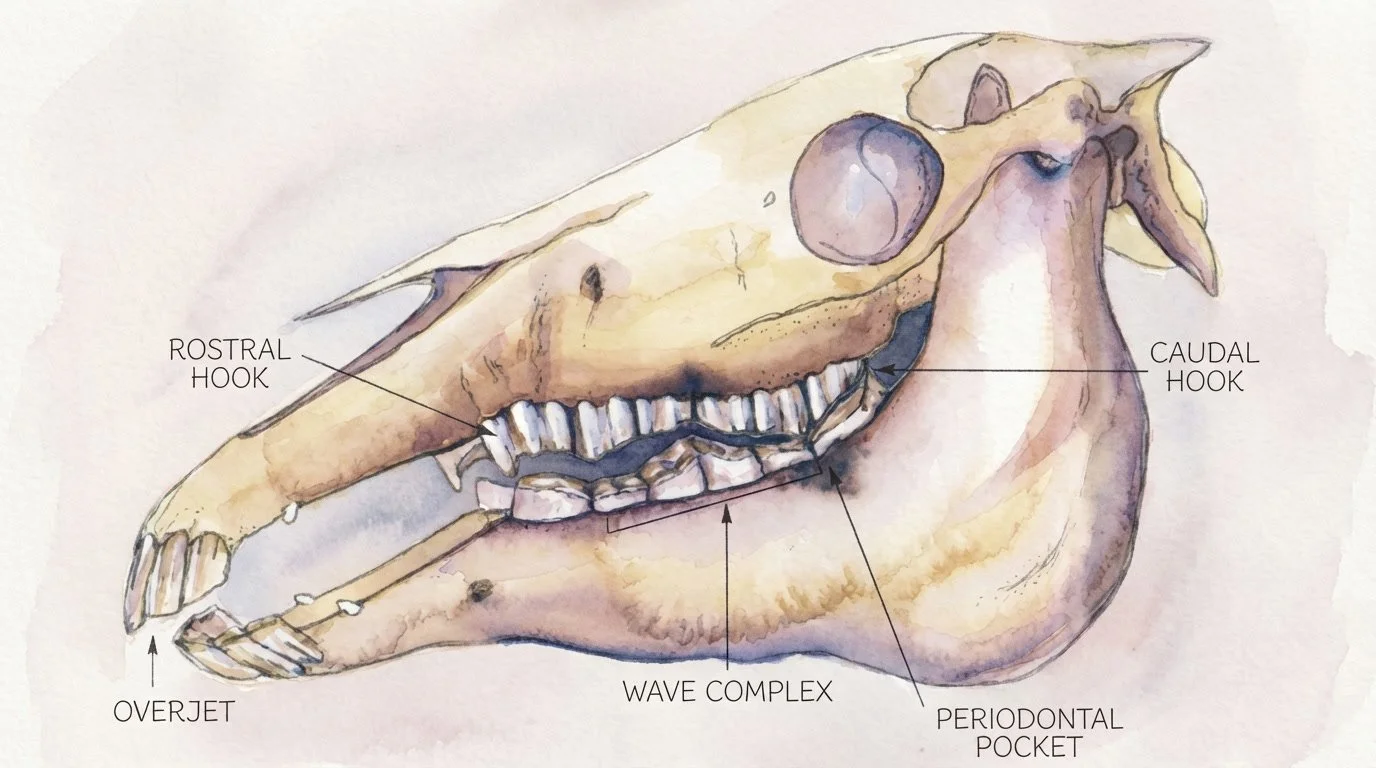
When the reserve crown is gone, the grinding surface becomes smooth or develops irregular wear patterns, such as wave mouths (uneven heights) or hooks. This makes it physically impossible for them to process long-stem forage into the 2mm-sized particles required for the hindgut to do its job.
The Warning Sign: Look for "quidding"—small, cigar-shaped wads of semi-chewed hay dropped in the feeder. If you see this, your horse is essentially starving in front of a full hay bale because they can no longer unlock the cellulose.
The Aging Hindgut: A Fading Ecosystem

The horse is a "hindgut fermenter," meaning they rely on a massive, 7-to-10-gallon vat called the cecum where billions of bacteria and protozoa break down fiber. As horses age, this microbial population becomes less diverse and less resilient.
Research suggests that seniors have a reduced ability to digest phosphorus, fiber, and certain proteins. Even if a horse is out on 250+ acres of lush pasture, an aging hindgut might only be operating at 60–70% efficiency compared to a younger horse. This means they are expending more energy digesting the food than they are actually receiving from it. Without a "pre-processed" forage source, they begin to pull energy from their own fat stores and muscle tissue to survive.
The Metabolic Shift: Protein and Fat as the New Pillars
A common misconception is that seniors are "retired" and therefore need less protein. In reality, the aging body is in a constant state of repair. Seniors often require a higher protein ceiling (12–14%) just to prevent "muscle wasting"—that distinctive dip in the topline and hollowed-out look behind the shoulders.
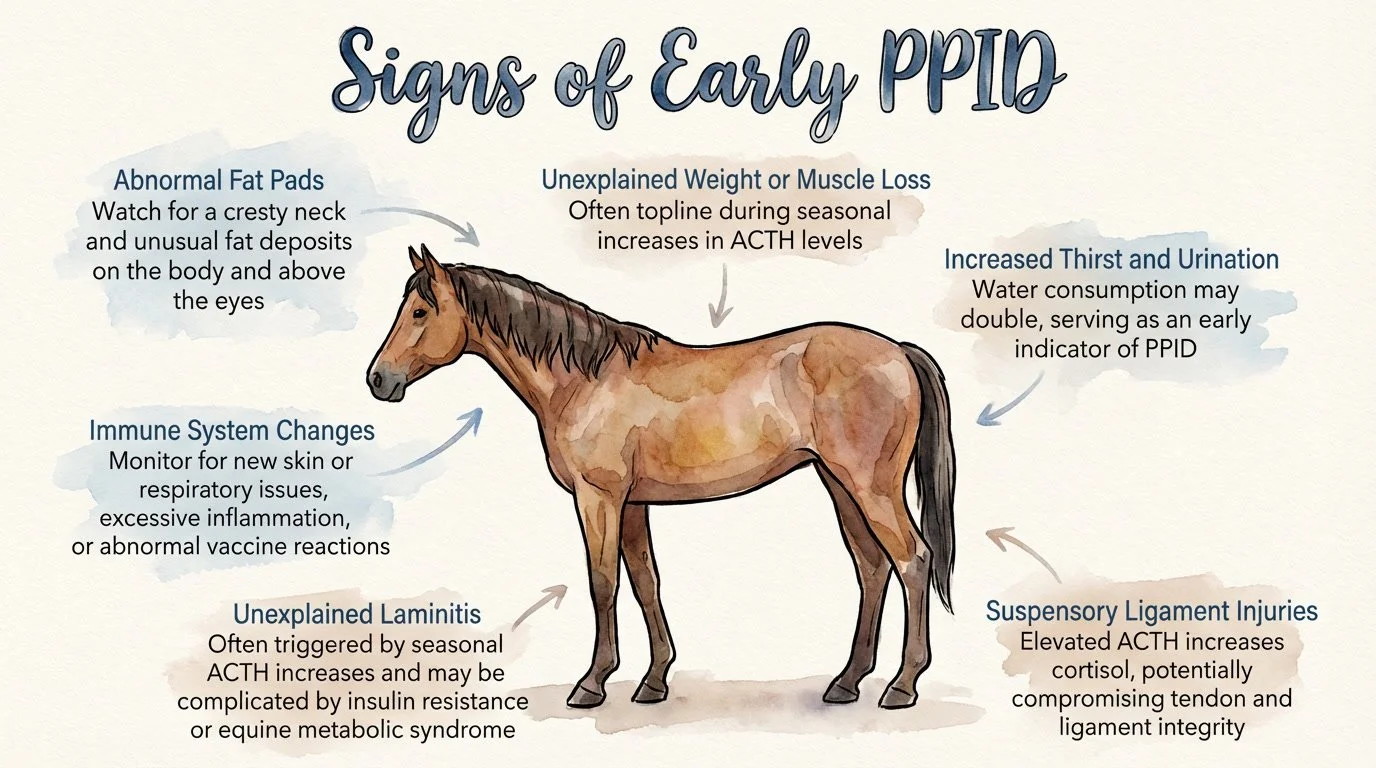
Furthermore, many seniors develop Equine Cushing’s Disease (PPID) or insulin resistance, making traditional sugary grains dangerous. This is where bioavailable fats (like flaxseed or rice bran) become the "secret weapon." Fat provides 2.25 times more energy per pound than carbohydrates, offering a "cool" calorie source that fuels the body without causing the dangerous insulin spikes associated with sweet feeds. By shifting the diet toward high-quality protein and fats, we are giving the "vintage engine" the specific fuel it needs to keep the frame filled out.
The Strategy of the "Slop"

At the ranch, we’ve learned that for a senior hard-keeper, the secret to weight gain isn’t found in the hay flake—it’s found in the bucket. We call this the "forage-first mash" strategy. By breaking down the physical structure of the food before it even hits the horse’s tongue, we bypass the two biggest hurdles of the senior horse: poor dentition and a sluggish digestive tract.
The Power of the "Soup": Why Hydration is Healing

We don't just dampen the feed; we create a high-moisture "soup." This "slop" strategy serves three critical roles:
Choke Prevention: For a horse with missing molars or "wave" teeth, dry pellets or cubes are a major choke hazard. Soaking them into a soft mash ensures the food passes safely through the esophagus.
The Hydration Hack: Seniors are notoriously poor drinkers, especially in cold weather. A "soupy" meal forces water intake, which is the best defense against impaction colic—a common and often fatal issue in older horses whose gut motility has slowed down.
Mechanical Digestion: By soaking the feed, you are essentially doing the "chewing" for the horse. This allows the stomach acids to begin work immediately rather than struggling with hard, dry clumps of fiber that the horse couldn't properly grind.
Beet Pulp & Alfalfa Pellets = The Fuel and the Bricks
To rebuild a horse, you need both energy (fuel) and structure (bricks). We use a combination of these two super-forages to balance the bucket:
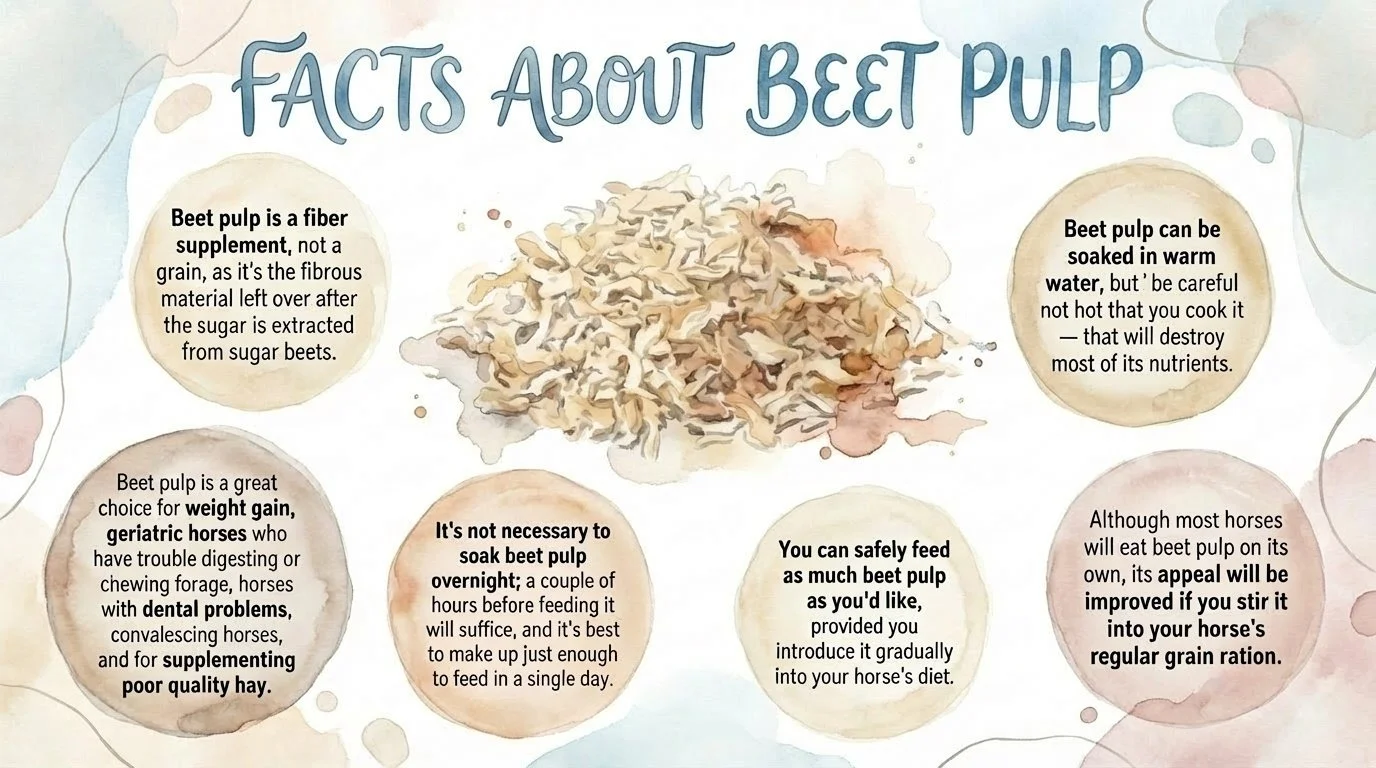
Beet Pulp (The Fuel): Known as a "super-fiber," beet pulp has a glycemic index lower than hay but contains more digestible energy than alfalfa. It is fermented in the hindgut, providing a steady, "cool" burn of energy without the sugar crashes or "hot" behavior caused by grain. It is the ultimate tool for filling out the barrel.
Alfalfa Pellets (The Bricks): If beet pulp is the fuel, alfalfa is the "brick and mortar" for the topline. It is rich in lysine and other essential amino acids that are the building blocks of muscle. For a horse with a "sunken" back, alfalfa provides the quality protein necessary to repair tissue and restore a healthy frame.
The 24/7 Forage Rule: Transitioning to "Pulp-on-Demand"
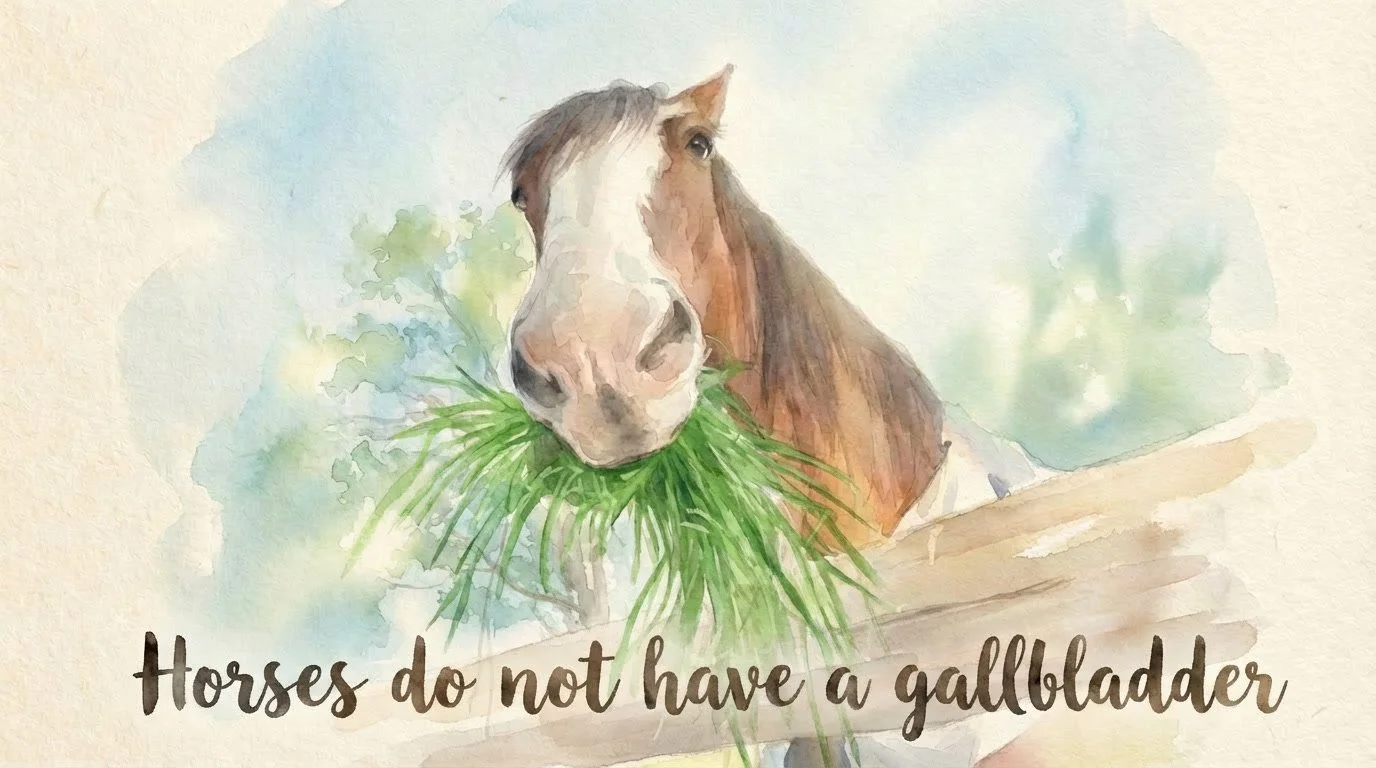
Unlike humans, horses do not have a gallbladder. In other mammals, the gallbladder acts as a storage tank for bile (a digestive fluid produced by the liver to break down fats). Because horses lack this reservoir, their livers secrete bile directly into the small intestine at a slow, continuous drip. To manage this constant flow of digestive juices and prevent the buildup of corrosive stomach acid, a horse must eat for 16 to 18 hours a day. This steady intake of forage acts as a physical buffer, neutralizing the acid and preventing the development of painful gastric ulcers. For a senior horse, maintaining this "trickle" of fiber isn't just a dietary preference—it is a biological necessity for their survival.
When a horses stomach is empty, gastric acid continues to be produced, which quickly leads to painful ulcers. For a senior who can no longer chew hay, we cannot simply replace 24/7 grazing with two or three "bucket meals." They still need that constant "trickle" of fiber to line the stomach and buffer the acid.
Continuous Access: The goal is to move away from the "meal" mindset and toward a "constant forage" lifestyle. Our philosophy is that if they can still nibble grass on our 250+ acres, that’s great for their mental health, but their main caloric intake should be a consistently replenished "slop" station or chopped forage.
The Automatic Feeder Hack: A creative way to maintain this "trickle" effect without being tied to the barn is the use of automated feeders. Many owners have found success using programmable high-capacity feeders (often designed for large dogs or livestock). By setting these to dispense a small amount of alfalfa pellets every hour or two, you ensure the horse’s stomach never goes empty. This mimics natural grazing behavior and provides the ultimate protection against gastric ulcers.
Note: We understand that most automatic feeders cannot wet the food. However, a small amount—such as a half-cup of alfalfa pellets every hour or two—is generally safe for horses with some dental function left. It is just enough to keep the hindgut active and the stomach buffered between your larger, soaked "slop" meals.
Monitoring the Progress
The Weight Tape Ritual
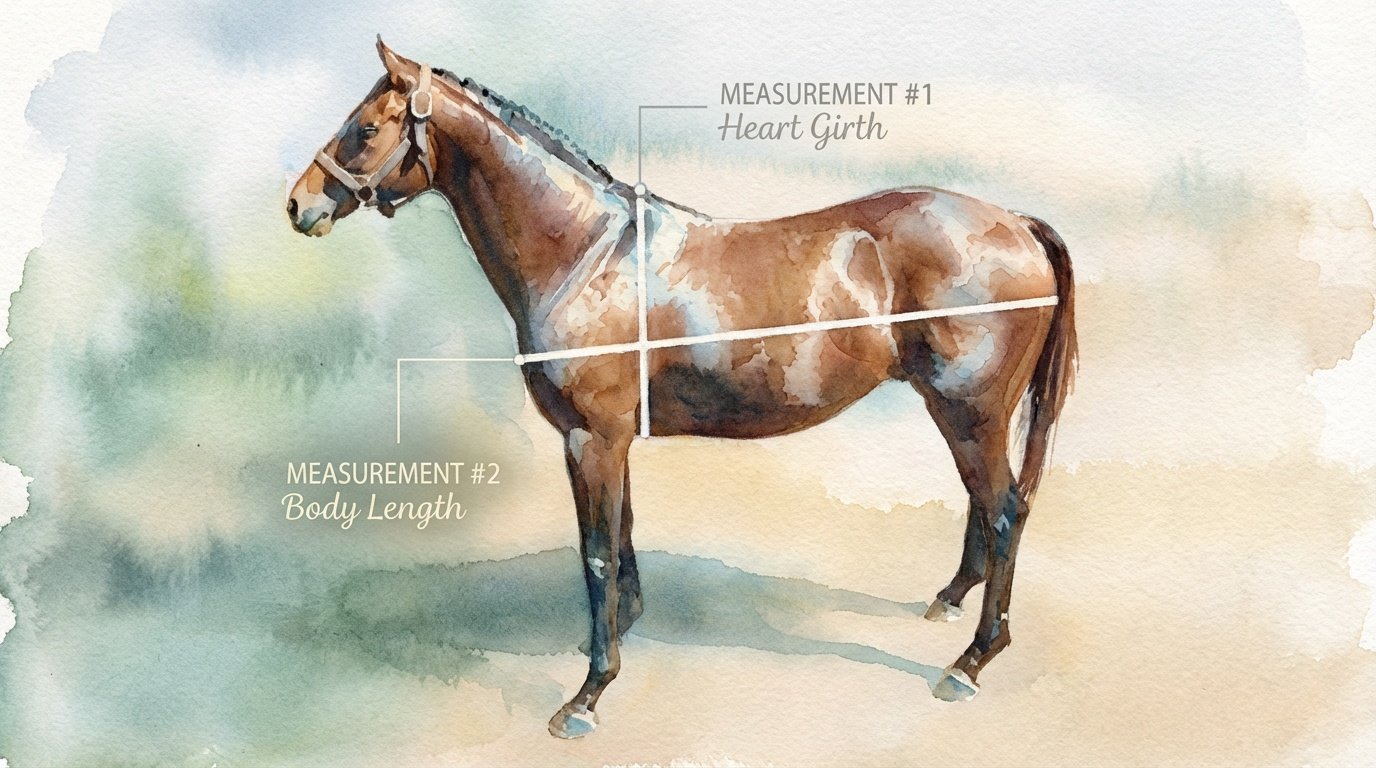
Winter coats are the great deceivers. A thick, fluffy coat can hide a 50-lb weight loss until it’s almost too late to fix. You cannot trust your eyes alone. Once a week, use a weight tape. Even if the number isn't 100% "scale accurate," it provides a consistent baseline. If that number drops two weeks in a row, it’s a signal that your "blueprint" needs an adjustment before the horse hits a crisis point.
Equine Weight Formulas (Measurements in Inches)
Adult Horse: (Heart Girth x Heart Girth x Body Length) ÷ 330 = Body weight in pounds
Yearling: (Heart Girth x Heart Girth x Body Length) ÷ 301 = Body weight in pounds
Weanling: (Heart Girth x Heart Girth x Body Length) ÷ 280 = Body weight in pounds
The Hands-On BCS (Body Condition Scoring)

Get your hands on the horse. In the rescue world, we use the Henneke Scale, but for a daily check, focus on these three areas:
The Ribs: You should be able to feel them easily with light pressure—like pens under a tablecloth—but they should not be protruding or "sharp."
The Tailhead: Feel for fat pads. If the area around the tailhead is hollow or "peaked," the horse is catabolizing its own fat stores.
The Neck and Shoulders: A "ewe neck" (a dip in front of the withers) or a visible "hole" behind the shoulder blade is a primary indicator of protein deficiency and muscle wasting.
The Long View: Why "20" is Just the Beginning

In the modern horse world, we often hear the term "senior" applied to horses as young as fifteen. By twenty, many are considered "over the hill," and by twenty-five, they are frequently viewed as being on borrowed time. But at Karma Ranch, we believe that with the right stewardship, these years are simply the start of a new chapter. Horses are remarkably resilient creatures that, when given the gift of a forever home and a tailored-forage-first lifestyle, can thrive for decades longer than society expects.
History proves what is possible when we refuse to give up. The world record for longevity is held by Old Billy, a 19th-century barge horse in England who lived to the astonishing age of 62. Even without modern veterinary medicine, Billy’s caretakers kept him in "blooming" health until his final days in 1822. In more recent times, horses and ponies like Sugar Puff (56) and Shayne (51) have reached their half-century milestones with grace.
While the "average" domestic horse lives into their late 20s or 30s, these outliers prove that the limit is often not the horse’s body, but the level of commitment from their humans. When we provide the "Slop," the 24/7 forage, and the specialized care their aging systems require, we aren't just extending their lives—we are honoring the bond they’ve shared with us for decades. A horse in their 30s or 40s still has a world of wisdom to offer, and by investing in their "Golden Years Blueprint," we ensure they spend those years exactly where they belong: safe, nourished, and loved.
The Golden Years Toolkit: Senior-Tested Gear
To help support the mission at Karma Ranch, we’ve curated a list of the exact gear and supplements we use to maintain our senior residents. Managing a "hard keeper" on a large scale requires specialized tools that prioritize absorption, comfort, and safety.
If you purchase through the links below, we may earn a small commission at no extra cost to you. These funds go directly back into the care of our sanctuary residents. Thank you for being an essential part of our community!
A blueprint is only as good as the tools used to build it. Below are the specific items that make our senior equine stewardship at Karma Ranch possible.
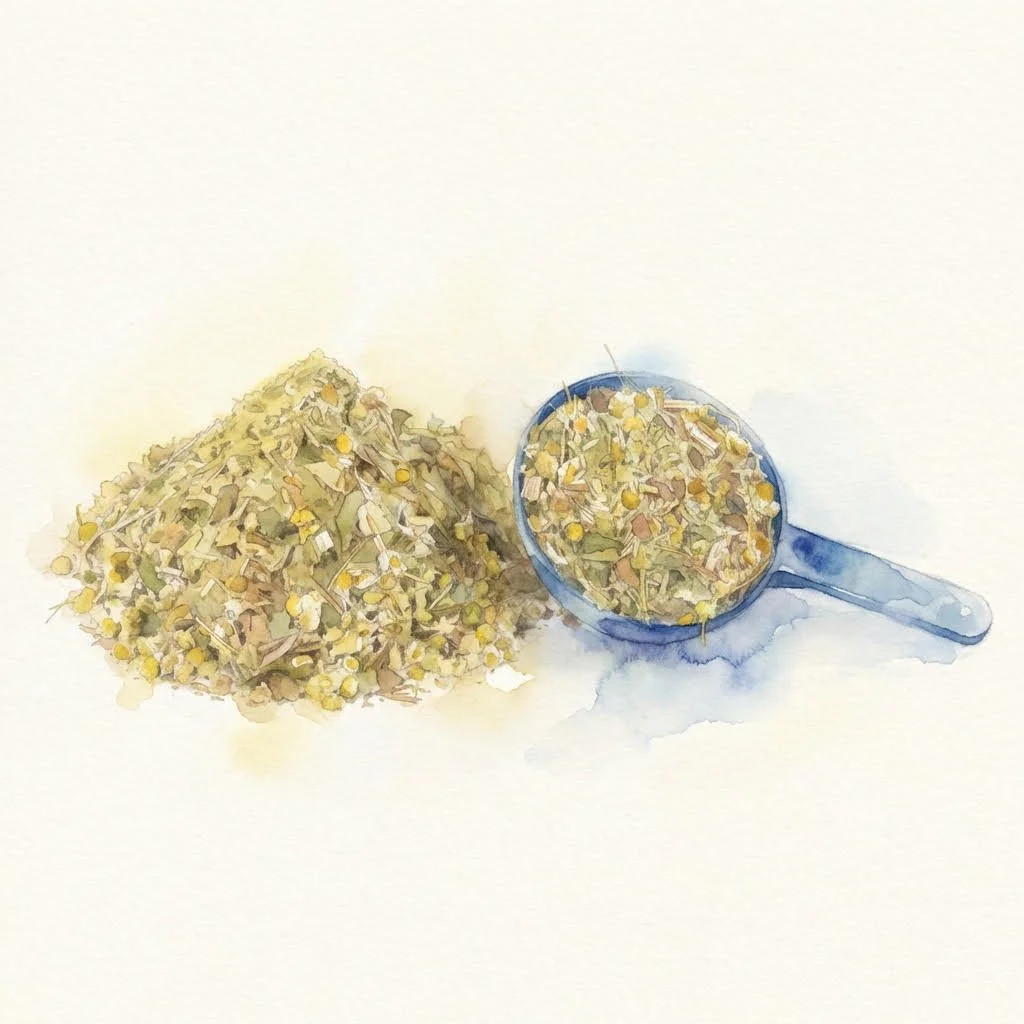
Hilton Herbs Senior Horse: Total Support for Older Horses & Ponies
As horses age, their needs become "whole-body" issues—it’s not just about weight, but about how they move and how their organs function. We trust Hilton Herbs Senior Horse because it is a comprehensive, clinically formulated herbal supplement that targets the specific challenges of the aging equine. It contains Milk Thistle seed for liver support, Hawthorn tops for healthy circulation, and Burdock root for kidney function. On a large-acreage ranch like ours, we need our seniors to feel good enough to move naturally across the land. This "total support" mix helps maintain supple joints and a resilient immune system, giving them the vitality to match their restored "bloom." It’s the perfect herbal partner to a forage-based diet.

SmartEquine Equi Treats | Carrot Cake Flavor
Just because a horse is a "hard keeper" doesn't mean they shouldn't get to enjoy a reward. However, for senior horses, a high-sugar treat can cause metabolic spikes that lead to inflammation or foot soreness. We love SmartEquine Equi Treats because they are built on a base of Beet Pulp and Alfalfa—the same "super-forages" we use in our senior slop. With less than 10% starch and sugar (NSC) and no added sugar, these are "guilt-free" cookies that are safe even for metabolic residents. They are bite-sized and easy to crunch, making them perfect for older teeth, and the Carrot Cake flavor is a massive hit at the ranch. It’s the best way to bond with your senior while staying 100% on-track with their forage-based blueprint.

Silver Lining Herbs Pituitary Support
At the ranch, we know that "looking old" is often just a symptom of a tired endocrine system. If a senior horse is struggling to shed their winter coat, losing muscle along their topline, or experiencing strange sweating patterns, their pituitary gland likely needs support. We trust Silver Lining Herbs because they use a specific blend of herbs, such as Chaste Tree Berry, to naturally support the endocrine system and help maintain normal cortisol levels. Unlike some harsh chemical alternatives, this herbal approach works with the horse's body to restore a healthy metabolic balance. It is a game-changer for helping "Cushingoid" seniors regain their energy, shed out cleanly, and stay comfortable year-round.

UltraCruz Equine Aloe Vera Supplement Pellets
Gastric discomfort is one of the most common—and often invisible—reasons a senior horse stops "blooming." We use UltraCruz Aloe Vera pellets as a proactive way to support a healthy stomach lining and normal gastric pH. Each serving provides the equivalent of 10,000 mg of Aloe Vera gel, which acts as a natural soothing agent for the digestive tract. While many people use liquid aloe juice, it can be difficult to administer in a barn setting, and many horses dislike the taste. These pellets are highly palatable, easy to measure, and stay fresh, making them the perfect "gut-health insurance policy" for seniors who are prone to stress or environmental changes.
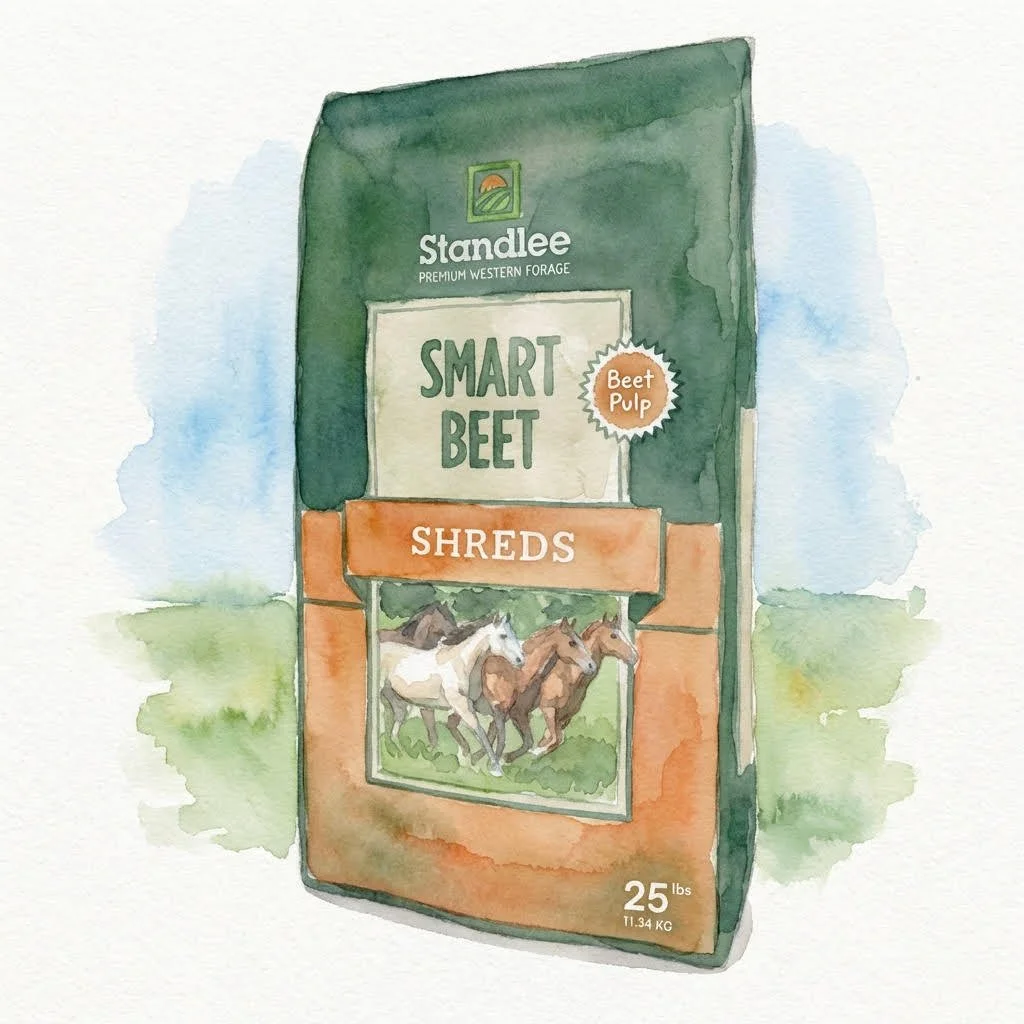
Standlee Beet Pulp Shreds
At Karma Ranch, we call beet pulp the "Super-Fiber" for a reason. Standlee’s Beet Pulp Shreds are our top choice for providing "cool," fermentable energy to our senior residents without the dangerous starch and sugar spikes found in traditional grains. Because these shreds are a byproduct of the sugar beet industry, they are naturally low in sugar (NSC), making them metabolically safe for horses with Cushing’s (PPID) or insulin resistance. Most importantly, when soaked into a soft mash, these shreds are incredibly easy to chew, bypass dental limitations, and serve as an excellent "hydration hack" to keep the digestive tract moving during cold snaps or dry spells. It is the ultimate foundation for any weight-gain "slop" recipe.
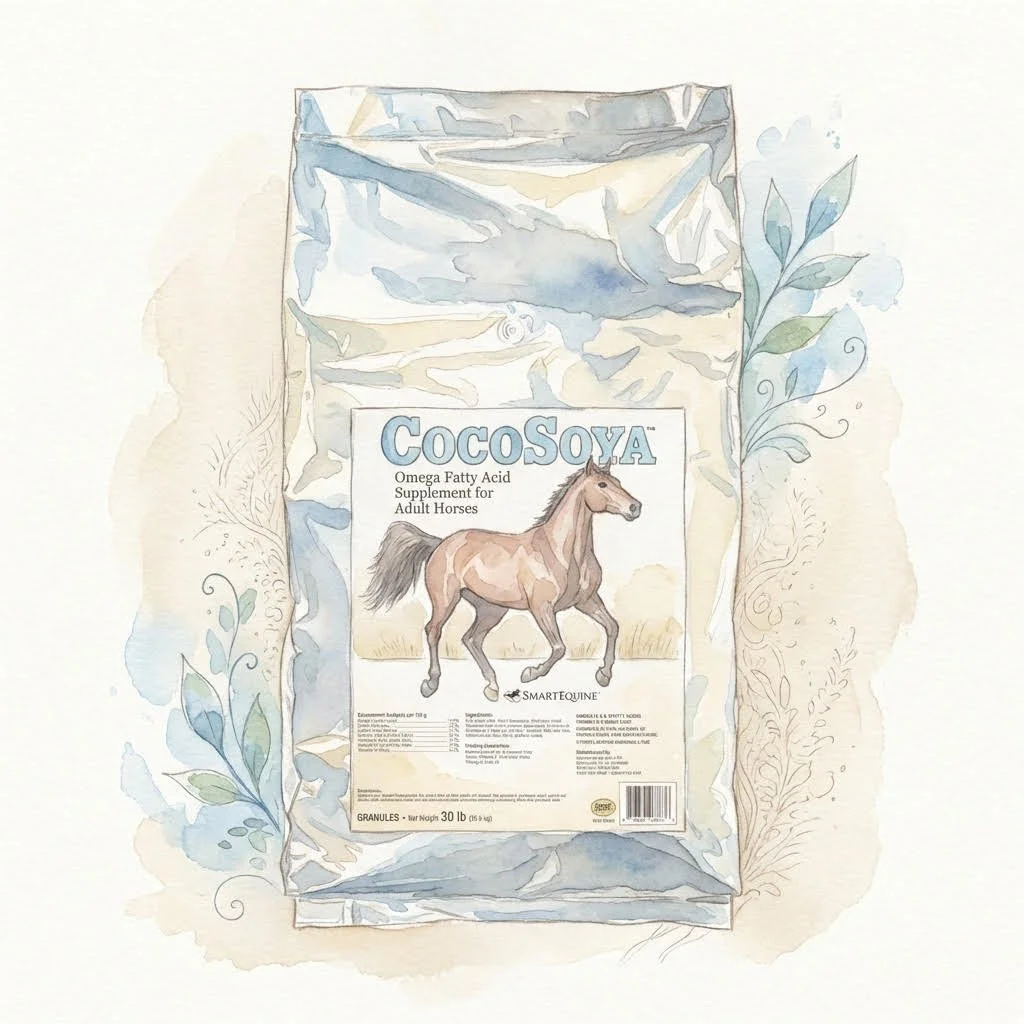
Uckele CocoSoya Granular | for Skin, Coat, and Weight Support
When we need to "level up" the calorie count for a senior hard-keeper without adding bulk or starch, we reach for CocoSoya. We specifically prefer this granular version over traditional liquid oils. Research suggests that large amounts of liquid oil can be difficult for some horses to process efficiently and may even interfere with the delicate fermentation of fiber in the hindgut. By using a stabilized granular form, we provide a rich source of Omega-3, 6, and 9 fatty acids in a gentler form on the digestive tract. It mixes perfectly into our "slop" without the mess, ensuring your senior gets the dense, cool calories they need for a lustrous "bloom" and healthy weight gain, without compromising their internal balance.
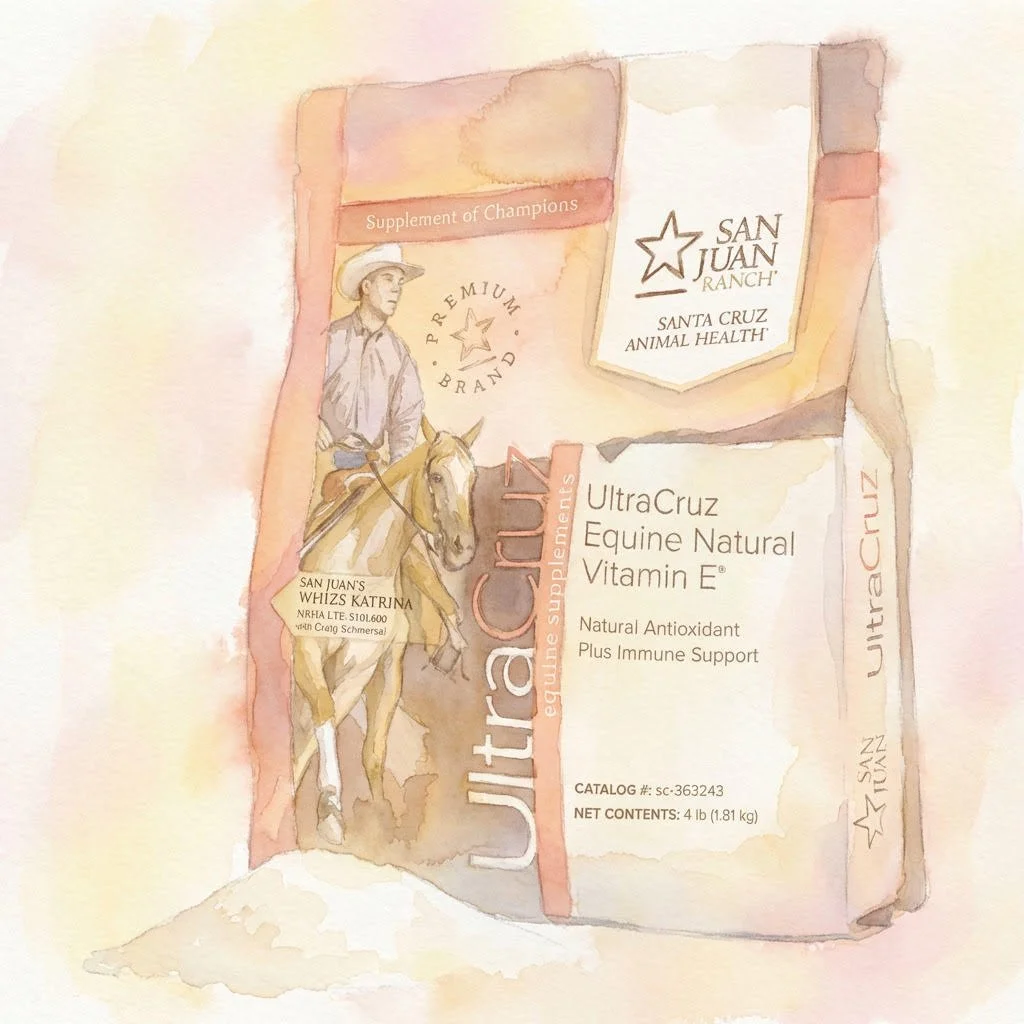
UltraCruz Equine Natural Vitamin E Supplement
At Karma Ranch, we are big fans of the UltraCruz line because of their commitment to high-quality, bioavailable ingredients. Vitamin E is a critical nutrient for the senior horse, acting as a powerhouse antioxidant that supports healthy muscle function, a resilient immune system, and neurological health. While younger horses can often get enough Vitamin E from fresh pasture, the aging body is less efficient at absorbing it, and many seniors—especially those on a primarily hay or "slop" based diet—quickly become deficient. We choose this specific "Natural" (d-alpha-tocopherol) form because it is significantly more bioavailable and effective than synthetic versions. It is an essential "insurance policy" for keeping your seniors' internal systems as vibrant as their outward "bloom."
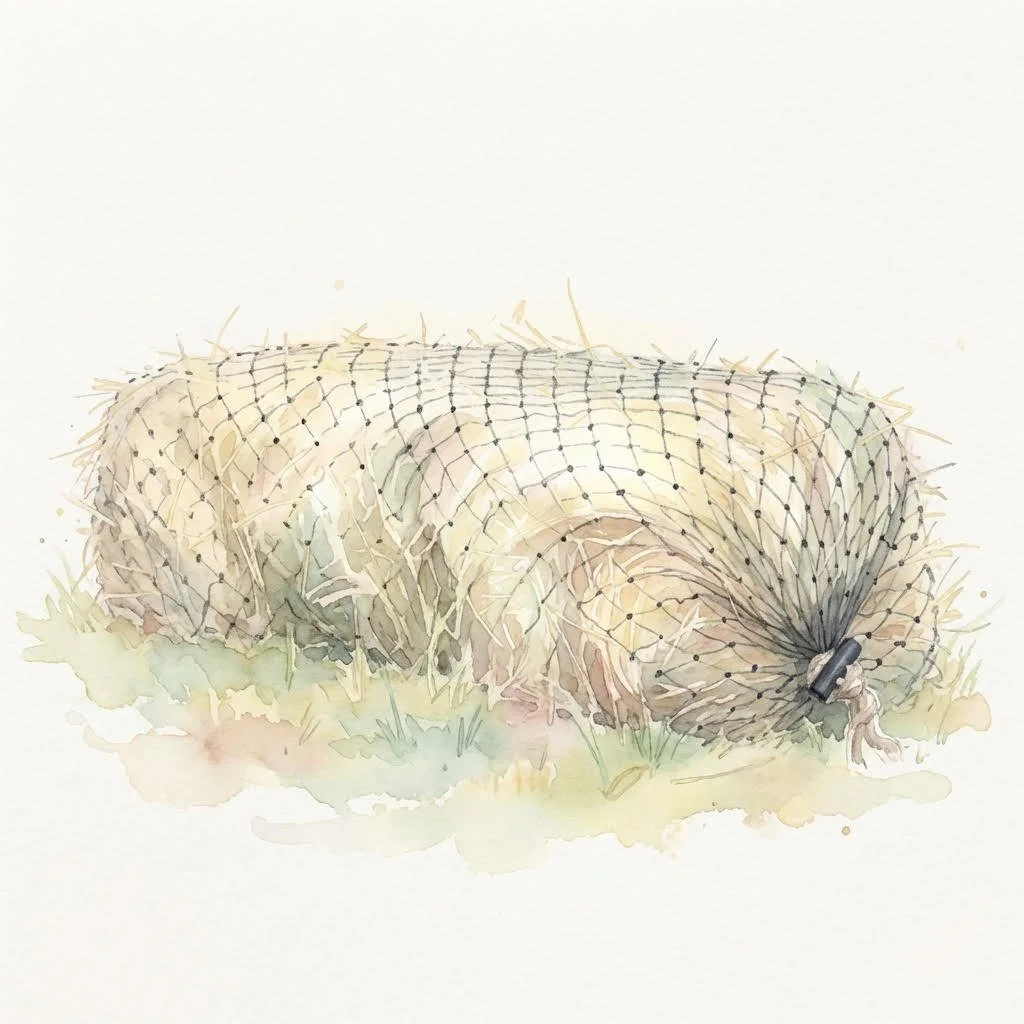
Hay Chix Slow Feeder Hay Net
Even though our seniors rely on "slop" for their main calories, we never want them to stand on an empty stomach. Horses are biological "trickle feeders," and without constant forage to chew on, they are at high risk for painful gastric ulcers. We trust Hay Chix nets because they are the gold standard for durability and safety in a ranch setting. We specifically suggest using these nets for seniors to ensure they always have a clean, steady supply of hay to "nibble" on throughout the day. This satisfies their natural urge to graze and keeps the digestive tract moving between their hydrated mash meals, providing the perfect balance of high-calorie nutrition and gut-protecting fiber.
Items We Stand By
These are the essentials we trust to keep our senior residents thriving and comfortable at Karma Ranch Rescue & Sanctuary. Navigating the "golden years" requires a different set of tools, and we only recommend products that have been field-tested on our own hard keepers.
Whether you choose to support Karma Ranch by purchasing through the links above—which contributes directly to our mission of providing a forever home for seniors—or you prefer to buy directly from the brands, our goal remains the same: sharing what works.
We believe these are truly essential items that will strengthen your senior management strategy and ensure your horse remains "blooming" for years to come. Providing the best care possible is the ultimate way to honor the lifetime of service these horses have given us.