
When people look at 250 acres of our high-elevation Montana plains, they see a rugged landscape framed by a distant mesa. The most common question we get is, "Can trees even grow there?" My answer is always the same: Any land can be regenerated if you have the right blueprint.
At Karma Ranch, we aren't just planting trees; we are restoring an ecosystem.
Here is how we are turning "dirt" back into living, breathing soil.
Visualizing the Forest: The 14,000 Tree Perspective

To some, planting 14,000 trees might sound like we’re trying to create an impassable jungle. But when you look at the math across our 250-acre sanctuary, it’s actually a beautiful, spacious design.
Even if we dedicated just 50 acres of the ranch specifically to this reforestation effort, each tree would have approximately 155 square feet of its own dedicated room to grow. This creates a healthy spacing of roughly 12.5 feet between every single tree.
Why 12.5 feet is the "Magic Number":
Creating a Microclimate: This spacing allows canopies to close within a few years, creating essential shade that keeps the soil cool and moist—a lifesaver in the Montana sun.
Natural Competition: By planting at this density, trees compete slightly for light, which encourages them to grow straighter, taller, and stronger.
Safety for the Horses: This is the perfect "Goldilocks" distance for our rescue horses. It’s wide enough for them to wander freely and safely, yet dense enough to provide a massive windbreak and thermal cover during harsh winters.
Building Up, Not Tilling Down

The biggest mistake in traditional land management is "tilling"—disturbing the earth to force growth. Tilling destroys the very microbial life and fungal networks that trees need to survive. At Karma Ranch, we use the Layering Method. Instead of breaking the soil, we layer organic materials—cardboard, compost, and mulch—directly on top of the ground.
This layering process does three things simultaneously:
Suppresses Weeds: It naturally manages invasive growth without chemicals.
Retains Moisture: It creates a protective blanket that keeps the Montana soil hydrated.
Creates New Topsoil: As these layers decompose, they turn into rich, dark "black gold" for our 14,000 native trees.
The Four Pillars of Our Regeneration Strategy

1. The Power of "Animal Impact."
Our rescue horses are our partners in regeneration. Through managed rotational grazing and paddock track systems, their manure becomes the primary fertilizer, reintroducing essential nitrogen and microbes into the soil.
Horse manure is uniquely rich in organic matter that improves soil aggregation, allowing the land to better retain water and resist erosion. As the herd moves across the acreage, they deposit a complex cocktail of carbon and nutrients that stimulate the mycorrhizal fungi networks beneath the surface. This process effectively "carbon sinks" the atmospheric CO2 into the roots of our pastures, turning a potential waste product into a regenerative tool that restores the health of the Montana prairie.

2. Building Soil Sponge
Healthy soil should act like a sponge. By planting 14,000 native trees and shrubs, we are creating a root system that holds water and prevents erosion, making the entire 250 acres resilient against drought.
3. Carbon Sequestration Our goal is to be a carbon-positive sanctuary. Every tree planted helps pull carbon out of the atmosphere and store it in the ground.
4. The Disruptor’s View The traditional mindset says you can only plant where the soil is "already good". We believe that as stewards of the land, it is our job to make the soil good. Our March 17th Kickstarter is the first step in a legacy that will outlive us all.
A Future Rooted in Community
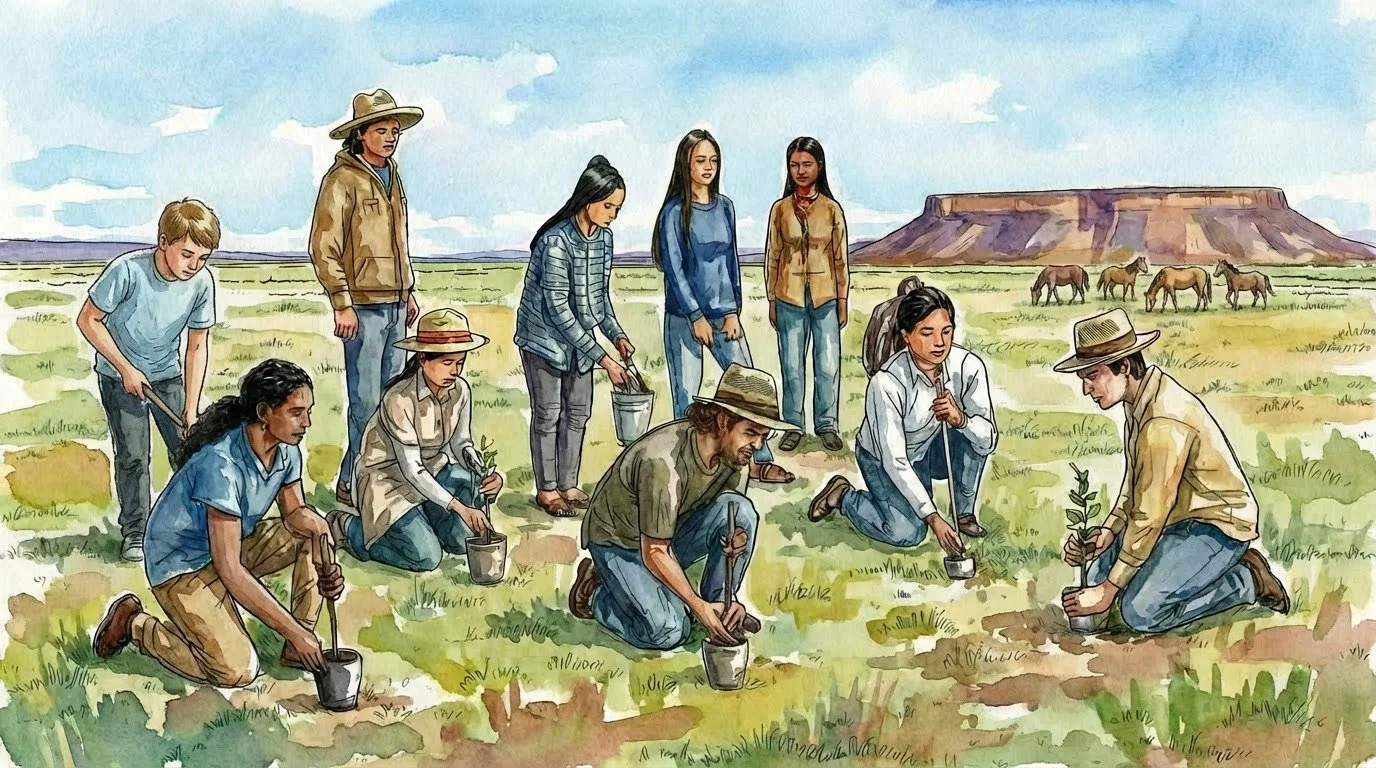
We invite you to come "get your hands in the dirt" and help us with the layering process once our off-grid micro-resort opens. This is more than a stay; it is an immersion into the rhythm of a working regenerative sanctuary. Here, the boundaries between the guest and the land dissolve. You aren't just a visitor; you are a co-creator of this ecosystem. By participating in our compost layering and permaculture planting, you are directly contributing to the "spongification" of the soil, helping us build a landscape that can withstand Montana's elements and provide a lush, diverse habitat for the wildlife that shares this space with our herd.
Together, we can watch as the native trees we plant today—nourished by the very soil we've built—become the towering shade that protects our 95 rescue horses and the generations that follow. This is the 95-Moon Milestone in action: a commitment to a timeline that outlives us. We are building a sanctuary where the community gathers to learn, heal, and witness nature's incredible resilience when given 250+ acres to truly thrive. Every tree planted and every handful of soil turned is a vote for a future where horses and land are restored with dignity.
Join the Regeneration Journey
The transformation of these 250 acres won't happen overnight, but it is happening—one layer of soil and one tree at a time. Whether you want to learn more about regenerative land management, follow the stories of our future 95 rescue horses, or be the first to know when our March 17th Kickstarter goes live, we’d love to have you in our inner circle.
Want to read one of our favorite books? Or watch the movie?