Beyond the Breaking Point: Restoring Dignity to the Discarded

In the traditional horse world, we are conditioned to see a three-year-old as a finished athlete and a ten-year-old as "middle-aged." But if you look at the biological sciences, we have it all backward. We are reaching the "breaking point" before the foundation is even dry.
We are asking for peak performance from adolescent bodies that are still under construction, and then we wonder why these animals are "retired," "sour," or "unsound" by the time they should be entering their prime.
At Karma Ranch, we believe the tragedy of the "discarded" horse isn't a failure of the animal—it’s a failure of our timeline.
The Myth of the "Finished" Three-Year-Old
The idea that a horse is "ready" because it looks large and muscular at age two or three is dangerous. It’s an outdated tradition that ignores decades of equine veterinary science. We mistake size for maturity. Skeletal maturity happens from the ground up, and the most critical parts of the horse are the last to finish.
As world-renowned biomechanics expert Dr. Deb Bennett has proven, there is no such thing as an "early maturing" breed. Whether it is a Thoroughbred bred for the track, a Quarter Horse for barrels, or a Draft for the plow, the schedule of skeletal fusion is the same across the species, no matter the breed or size.

Built for Speed, Broken by Tradition
.
The Lethal Cost of the Early Start
On average, between 1.25 and 1.5 out of every 1,000 starts result in a fatal breakdown on the track. When we look at the annual totals, this translates to approximately 300 to 450 Thoroughbreds dying in sanctioned races each year. However, the tragedy extends far beyond the finish line; when you include deaths that occur during morning training sessions or "sudden deaths" like cardiac events linked to the extreme stress of racing, the estimated toll rises to between 700 and 800 horses annually.
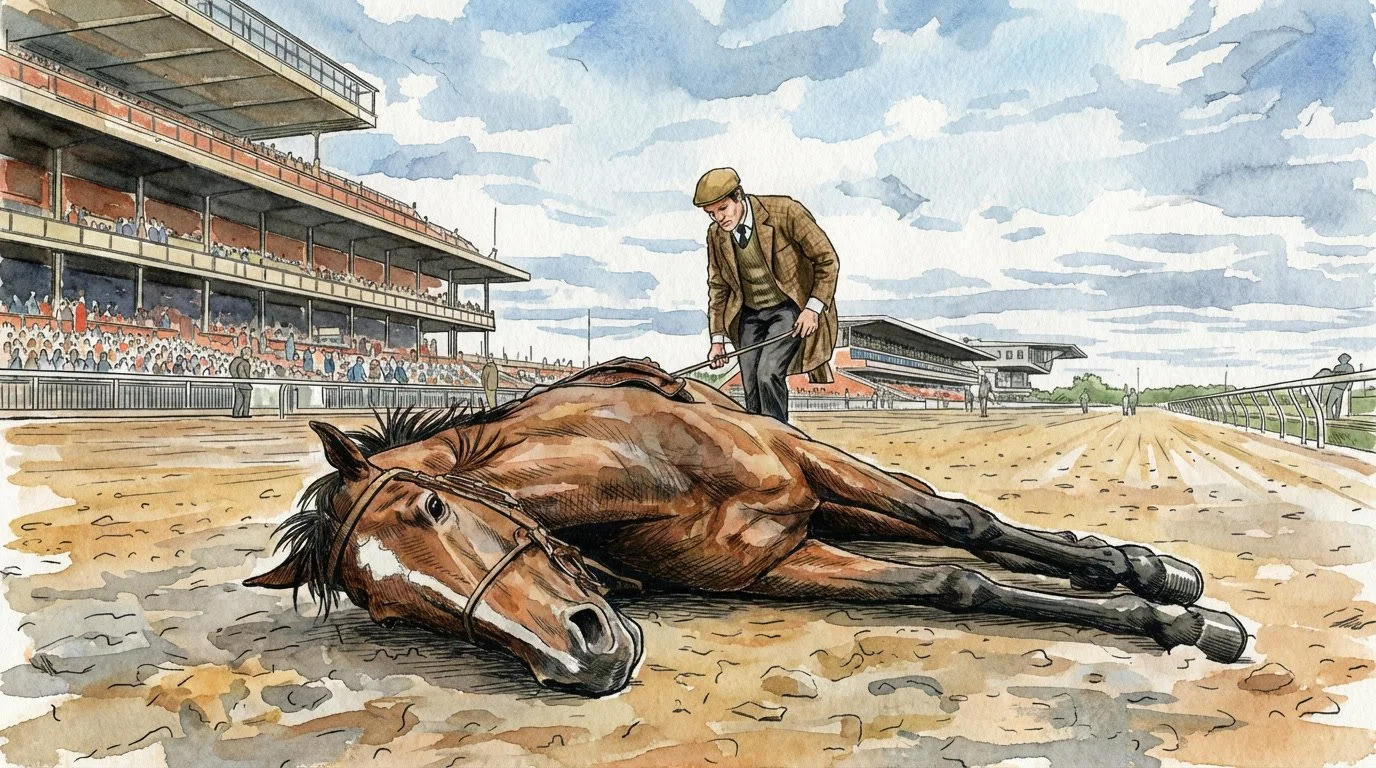
These aren't just statistics; they are the predictable result of a systemic biological mismatch. In the racing industry, the "Two-Year-Old in Training" is the gold standard, yet at twenty-four months old, a horse's distal limbs—specifically the knees and fetlocks—are often still comprised of open growth plates and soft, vascularized tissue. When we ask a juvenile skeleton to perform at 100% capacity, we are asking it to withstand thousands of pounds of concussive force on structures that haven't even finished ossification.
By pushing for "speed early," we aren't just risking a career; we are inviting catastrophic failure. A majority of these breakdowns are localized to the fetlock and carpal joints, the very areas that equine science proves are years away from being structurally sound. These are largely preventable losses of young horses whose foundations were treated as finished when they were barely half-built.
The Ghost of Reigning Storm: When "Perfect" is a Mask
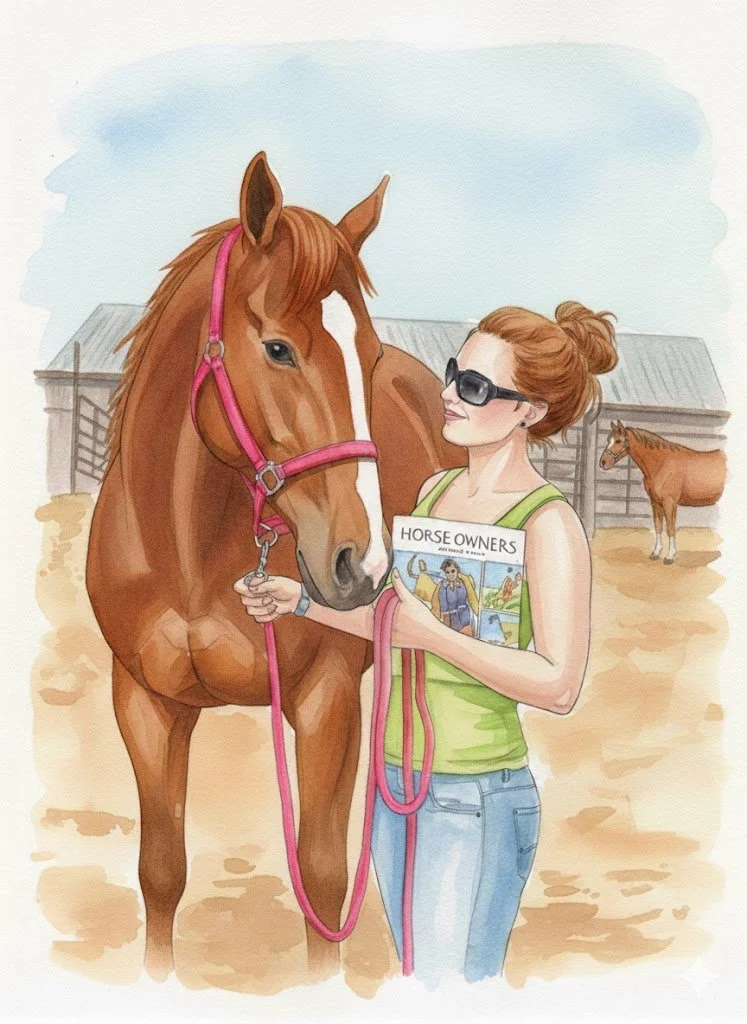
For Noelle, the founder of Karma Ranch, the plight of the Thoroughbred isn't just a cause—it’s personal. Her journey into rescue began with an Off-The-Track Thoroughbred (OTTB) who would change her life forever.
When Noelle was just sixteen, she brought home a horse she thought was a miracle. He was Charlie Pink to her—but to the world, he was the 17.2-hand powerhouse "Spriggs" in the show jumping ring, and "Reigning Storm" on the track.
Charlie had been pushed to his limits from the start. As Reigning Storm, he raced until he was five years old, enduring over 36 starts on the track. From there, he was funneled straight into the intense environment of a professional show jumping barn. By the time he was seven, he had been used up, cast aside, and dumped at a rescue.
For the first three days, Charlie seemed like the "perfect" horse. He was compliant, still, and seemingly unflappable. Noelle was baffled—why would a horse this beautifully built, looking every bit the elite Warmblood, be discarded so young?
Then the drugs wore off.
The "perfection" Noelle saw wasn't training; it was a chemical and psychological shroud. As the sedation faded, the reality of the true side of the horse the industry had broken emerged. Charlie wasn’t just "difficult"—he was a horse who had been pushed until his body broke.
For two years, Noelle did everything the "right" way. She brought in the best OTTB trainers, top-tier vets, chiropractors, and acupuncturists. But the damage inflicted by a system that prioritizes the ribbon over the soul ran deeper than any needle could reach.
The industry looked at a 17.2-hand athlete and saw potential wasted. Critics were angry that she chose to retire a 9-year-old OTTB to a pasture. But Noelle saw the truth: The industry hadn't just broken his body; they had shattered his spirit.
The most profound act of horsemanship isn't staying on; it’s knowing when to get off forever. Noelle realized the only way to give Charlie Pink the peace he was owed was to promise him that no human would ever demand anything from his back again.
Sometimes, "breaking" a horse doesn't look like a rearing animal—it looks like a horse that has simply given up. And sometimes, the only way to fix it is to stop asking and start listening.

Torque vs. Time: The Quarter Horse Quandary
The Torque of the Turn: A Biological Mismatch
In barrel racing, the demand is for a 1,200-pound animal to pivot at a dead sprint. This isn't just a feat of speed; it is a masterpiece of torque. When a 4-year-old is asked to perform this high-velocity "S-turn" maneuver, that force is channeled through a spine that is still years away from its 95-Moon Milestone. The vertebrae are not yet a solid column; they are a series of shifting plates under extreme rotational stress.
It is a telling paradox that while the industry markets the dream of the "4-year-old Futurity Champion," the actual World Champions—the horses with the grit and physical longevity to sustain a professional career—are often 12 or 13 years old. The data proves that true excellence requires a mature foundation. The "discarded" 7-year-old barrel horse is rarely "washed up" by nature; instead, they are a victim of a timeline that prioritized the stopwatch over the skeleton, reaching a breaking point before their bones had the chance to finish growing.
The Legend of Scamper: The $1,100 "Unrideable" Horse

Scamper wasn't born a legend; he was a horse the industry had already given up on by age five. He was a 'renegade' who didn't even see a barrel until his skeleton was nearly mature.
Most trainers would say a horse started at five is a 'late bloomer' who missed their window. Scamper proved the window doesn't close—it opens wider when you wait for the horse. He didn't win his first million because he was started early; he won it because his body was still sound enough to keep winning when everyone else had already retired.
Scamper’s Timeline: The "Untouched" Years
If the industry timeline is a failure of logic, then the career of the most successful barrel horse in history is the ultimate proof of what happens when we get it right. While most future world champions are being ridden hard at age two, Scamper’s path was very different:
Age 0–5: Scamper was not bred or raised as a performance prospect. He spent his early years essentially as a "reject." He went through several owners, one of whom he reportedly bucked off so badly that they ended up in the hospital.
Age 5: Charmayne James’ father bought him from a feedlot cowboy for $1,100. At this point, Scamper was already five years old—an age when the industry considers a barrel horse "behind" or already finished with their futurity career.
The First Ride: Charmayne was only 11 years old when she first got on him. Because he was considered "cold-backed" (prone to bucking), her father was cautious.
The Rapid Rise: Once they started, the progress was natural rather than forced. Within just two weeks of starting barrel patterns, they won their first small "playday" competition.
Age 7: He entered his first professional season as a "rookie."
The "Late Start" Advantage
Because Scamper spent his most vulnerable developmental years (ages 2 through 4) not being subjected to the extreme torque of a barrel pattern, his skeletal foundation remained intact. While other horses were "breaking" at age five, Scamper was just beginning.
By the time he reached his physical prime at age eight, his joints and spine were fully solidified and ready to handle the pressure that would lead to 10 consecutive world titles. Scamper competed at the highest level until he was retired at age 16—an age when most early-started futurity horses are already long gone. He lived to be 35 years old, remaining sound and healthy nearly his entire life.

Flight Paths and Fractures: The Physics of Landing
The Biomechanical Cost of the Landing
When we watch a horse clear a fence, we often focus on the height and the "tuck," but the most critical moment for the horse’s longevity happens during the landing. At this split second, the laws of physics are unforgiving. The entire mass of the horse, combined with the rider’s weight and the acceleration of gravity, is concentrated onto a single leading front limb.

The Loading Force and Skeletal Maturity
Data in equine biomechanics shows that the force on the leading front leg during landing can exceed 2 to 3 times the horse's total body weight. For a standard 1,200lb horse, this equates to over 3,000lbs of pressure slamming down on the distal limb. This "Ground Reaction Force" travels upward through the hoof, pastern, and cannon bone.
From a developmental standpoint, this is a massive risk for young horses. The carpal bones (knees) do not finish fusing until approximately age 3.5, and the humerus and scapula—which act as the primary shock absorbers for the front end—do not finish ossifying until ages 4 or 5. Asking a horse to jump before these growth plates are closed means asking soft cartilage to withstand several tons of force.
Hyperextension and Soft Tissue Strain
At impact, the fetlock joint often hyperextends to the point of almost touching the ground. This creates extreme mechanical strain on the Suspensory Ligament and the Deep Digital Flexor Tendon. This isn't just theory; the "cost" is reflected in sports medicine statistics:
Tendon and Ligament Pathologies: Research indicates that 30% to 45% of competitive show jumpers will experience a significant soft-tissue injury during their career.
Radiographic Evidence of Arthritis: In studies of young jumping horses, nearly 60% showed radiographic changes—the beginning stages of osteoarthritis—in their hocks or front fetlocks by just six years old.
The Symmetry Problem: Because horses typically favor one "lead" leg when landing, they develop asymmetrical wear. This results in the "mystery lameness" frequently seen in 8-year-olds, in which the horse is compensating for micro-fractures in the subchondral bone that never had the opportunity to heal properly during the skeletal growth phase.

The Modern Reality of the Plow
As Scamper proved, when the skeleton is allowed to reach maturity before the clock starts, the result is a legend. But while the barrel horse suffers from the torque of the turn, there is another group of giants facing a different kind of breaking point. For the draft horses in America’s Amish and Mennonite communities, the threat isn't speed—it's static compression. If a 1,200-pound Quarter Horse is too fragile for a barrel at age four, imagine the biological impact of a 2,000-pound Draft horse being hitched to a plow before its foundation is dry.
The Myth of the "Heavy" Foundation
There is a common misconception that because a Draft horse has "more bone," they can handle work sooner. The opposite is true. Larger, heavier-boned horses—especially males—are often the slowest to reach full skeletal fusion. While a Quarter Horse might be nearing spinal maturity at six, a massive 2,000-pound Percheron or Belgian often needs until age seven or eight before those vertebral growth plates are solid bone.
Static Compression: The Invisible Killer
In racing, damage comes from impact; in the field, it comes from leverage and load.
The Physics of the Pull: When a young Draft horse leans into a heavy collar to move a plow or a loaded stone boat, the force doesn't just stay in the shoulders. It creates a "telescoping" effect through the entire spinal column.
The Cartilage Crushing: If those vertebrae are still capped with soft cartilage, that constant, heavy pressure causes premature compression. This results in chronic "cold-backed" behavior, roached backs, and a total loss of "suspension" in their gait by the time they are ten.
The Traction Trap: To get traction, a horse must dig in with its hind end. This puts immense strain on the stifles and hocks. Because Drafts are often started at two or three years old—long before their hock growth plates fuse (around 3.5 years)—we see a massive rate of "bone spavin" and "shivers" in "used-up" plow horses.
The "Fresher" Stock Cycle
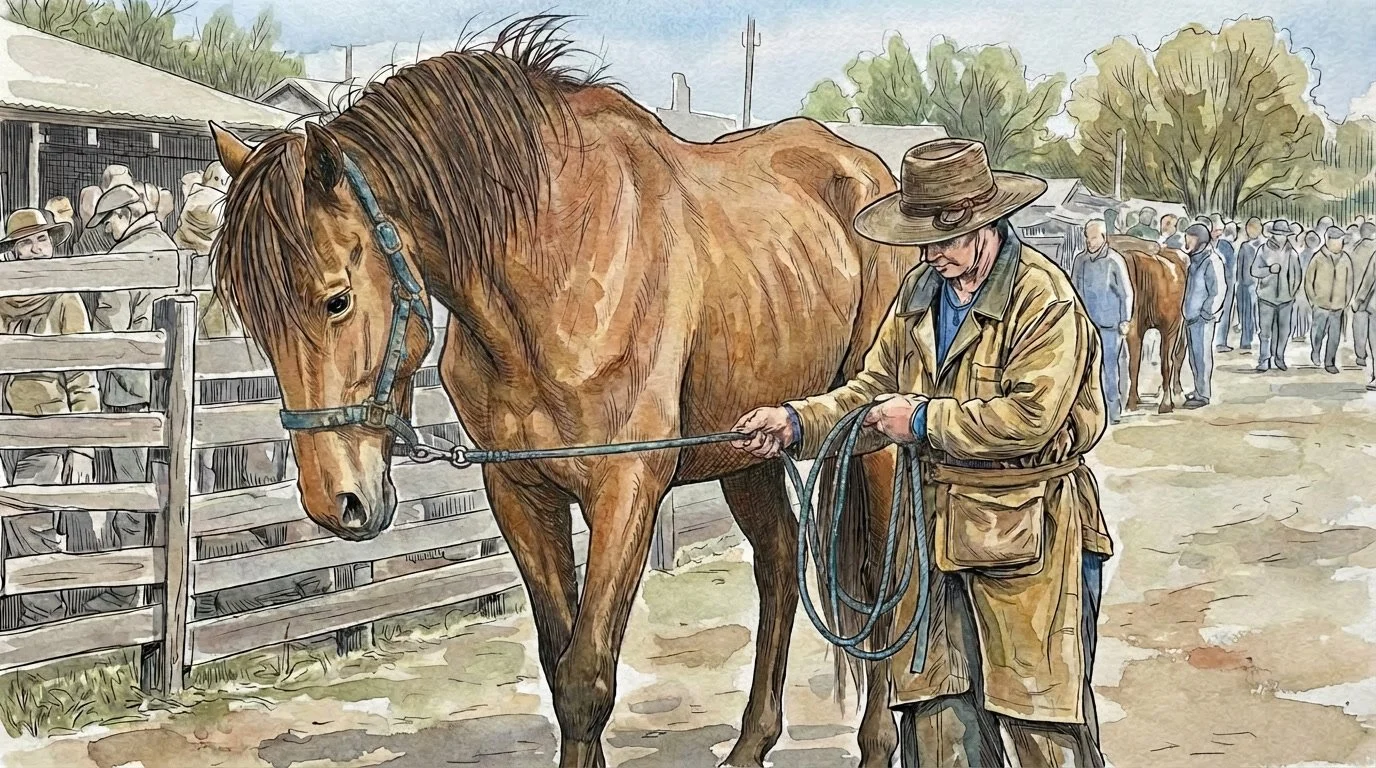
The tragedy of the "Plow Horse Pipeline" is built on a business model of replacement. In many working communities, a horse is worked at maximum capacity from age three to ten. At ten, when the cumulative damage to the cartilage finally manifests as visible lameness or a "slowness" in the field, they aren't retired—they are considered "traded out."
They are sent to the auction block as "broke to all farm machinery" to be replaced by a "fresher" three-year-old. The ten-year-old horse is discarded at the exact moment their body finally becomes structurally capable of doing the work it’s been forced to do their entire life.
The Auction Pipeline: By the Numbers
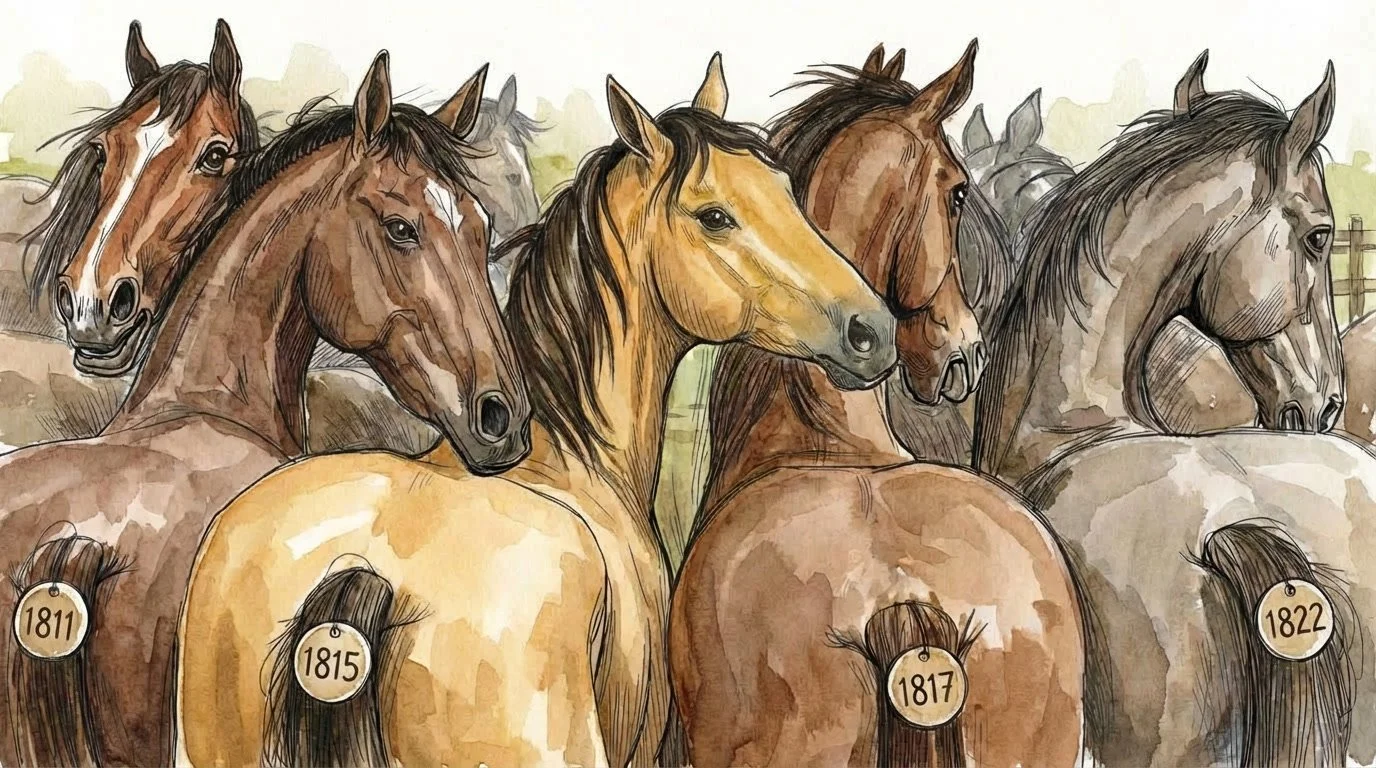
The "discarded" status of the American workhorse is most visible at regional livestock auctions in the Midwest and Northeast—hubs such as New Holland, PA; Bowie, TX; Stroud, OK; and Shipshewana, IN. These are the primary transition points at which broken horses become "loose horses" in the slaughter pipeline.
The 12-Year Expiration Date: While a horse can live into its 30 (some even living into their early 40’s), agricultural data shows the average "working life" for a draft horse in these communities is only 12 years. Because they are started as 2-year-olds, their skeletons are subjected to a decade of "static compression" before they ever reach the age of eight.
The Recent Surge: Despite a decade of decline, 2025 saw a tragic 24% increase in slaughter-bound horse exports. In 2024 alone, over 19,000 American horses were shipped across the border to Mexico and Canada.
The "Kill Buyer" Quota: At major auctions, up to 50% of horses in the "loose" pens are purchased by kill buyers. For an ex-plow horse, their value is often reduced to a price-per-pound—currently averaging $0.61 to $0.69/lb—the literal price of their flesh after a lifetime of labor.
The Overcrowding Crisis: Investigations at these hubs frequently find slaughter pens packed "like sardines," where draft horses, Thoroughbreds, and Quarter Horses—all suffering from the chronic "Breaking Point" injuries—wait for transport in trailers that offer no food, water, or rest.
The Science of the Spine
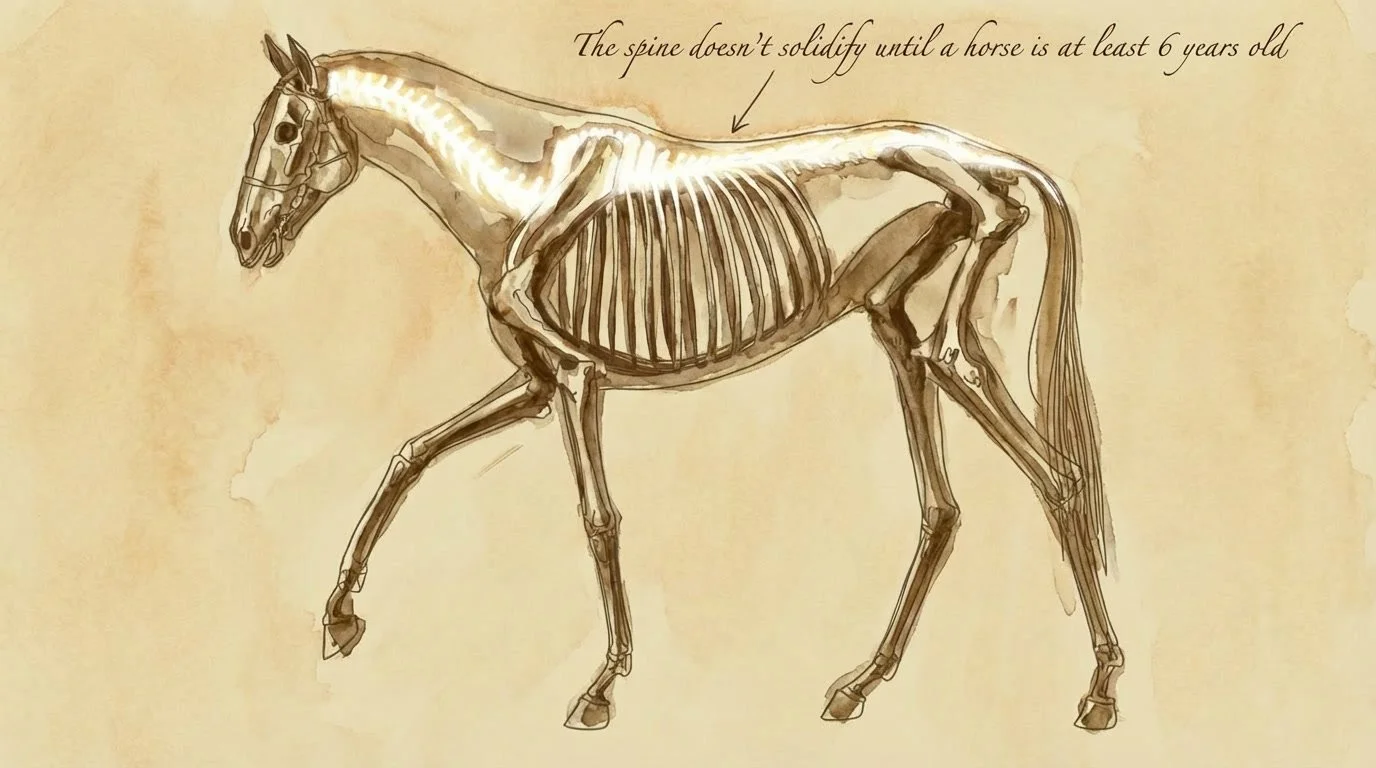
True maturity isn't reached until roughly 6 years of age. While the bones in a horse's lower legs fuse early, the most complex and fragile structures—the vertebrae of the neck and spine—are the very last to solidify.
When we put a saddle and a rider on a three-year-old, we aren't sitting on a solid bridge; we are sitting on a series of growth plates that are still soft and shifting. This is the literal Breaking Point. By the time these horses reach age ten, the cumulative damage to their spines and joints results in the "unsoundness" that leads to them being discarded. At Karma Ranch, our mission on these 250+ acres is to honor the 95-Moon Milestone, giving these "broken" horses the space, movement, and time they were denied in their youth, so they can finally find physical peace.
A horse’s skeleton develops from the ground up. The parts we sit on are the very last to solidify. The "Schedule of Fusion" follows a strict path:
The Hoof/Pastern: Fuses at birth.
The Cannon Bone: Fuses at approx. 1.5 years.
The Hocks and Knees: Fuse between 2.5 and 3.5 years.
The Pelvis and Spine: The very last to fuse. > "The vertebral column has 32 separate vertebrae, and each one has several growth plates. These do not finish fusing until a horse is at least 6 years old—and for tall horses or males, it is often 7 or 8 years old." — Dr. Deb Bennett
When we "break" a two or three-year-old, we are putting the weight of a rider directly onto a bridge made of cartilage, not bone. This leads to Kissing Spine and neck arthritis that doesn't fully manifest until the horse is 8 or 9.
The Nervous System "Shut Down"

Is this training or a siege? When a horse is pushed past their threshold—met with a whip for expressing fear—the spirit doesn't just bend; it breaks. This 'shut down' is often praised in the show ring as a 'calm' horse, but beneath the surface is a nervous system paralyzed by the impossibility of escape. True partnership cannot be built on the ruins of a horse’s autonomy.
When we push babies into high-pressure training, we aren't just hurting their bones; we are frying their nervous systems. A horse that is "stiff like a rock," "lazy," or "rearing" isn't being bad—they are experiencing functional collapse. Asking a 4-year-old in a state of terror to "move their feet" or "engage their hindquarters" is a total disrespect of a growing baby. They are physically and mentally overwhelmed because they don't have the neurological maturity to process the cortisol.
Why They Break by 10: The Decade of Compensation
By the time a horse reaches age 10, they have often spent 7-8 years compensating for micro-traumas sustained as a toddler. In any other biological context, we would call this "developmental sabotage." In the horse world, we call it "training.” It's nothing short of normal for the vast majority of horses.

The "Kids-Broke" 5-Year-Old.
A 5-year-old with "heavy show or trail miles" is often marketed as the pinnacle of training. In reality, it is a history of a horse being used up before it was built. When a horse is subjected to high-level torque, jumping, or traction before the age of skeletal integrity, the body attempts to protect the soft growth plates by building scar tissue and calcification. By the time that horse is 10, those "protective" measures have turned into chronic inflammation and a restricted range of motion.
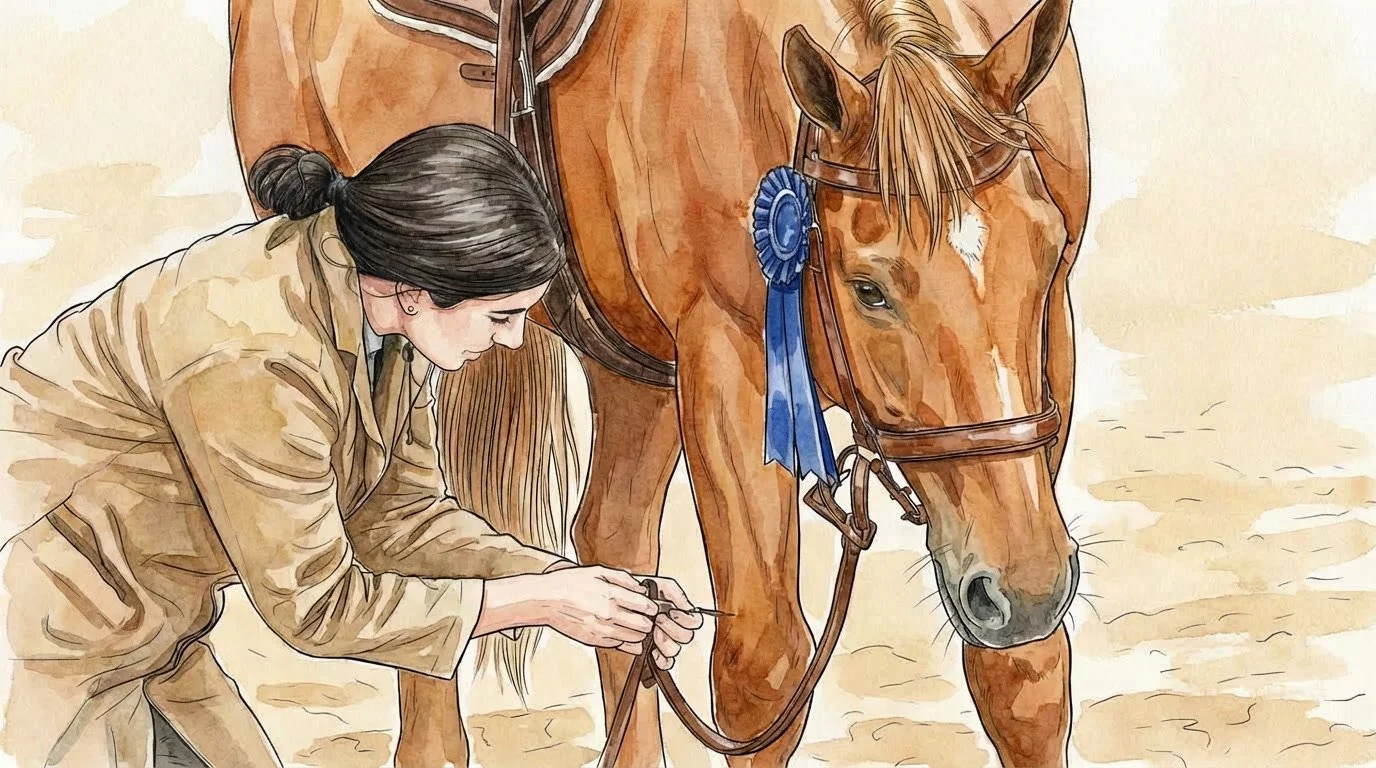
The Maintenance Cycle.
We have normalized "maintenance"—joint injections, NSAIDs, and corrective shoeing—for 10-year-olds because the industry refuses to admit the debt was incurred at age two or three. When we "inject hocks" on a young horse, we aren't "helping" them; we are masking the pain of a skeletal system that is crying out for rest. This cycle allows us to keep pushing a horse past its biological limits until the "maintenance" no longer works.
Functional Collapse and the "Sour" Horse. By age 10, the "sour," “stubborn,” or "lazy" horse is often just an animal in a state of functional collapse. Their nervous system is fried from years of trying to stabilize a skeleton that feels like it’s shifting underneath them. They are "discarded" not because they lost their talent, but because their bodies can no longer hide the damage.
Let's look at Jupiter, the founding member of Karma Ranches' herd. Mama to Baby Kale. She was dumped at an auction and ended up in a Kill Pen, completely shut down and labeled as non-halter-broke because she was so terrified of humans. Her history of abuse is shown in her countless scars and her broken facial bone.
The horse world needs to do better for every horse. Horses are sentient beings and deserve to live their lives with kindness and care. Horses do not deserve to be pushed to the limits until they are broken.
Lets look to the Experts…
“The last of the growth plates to fuse are those of the vertebral column. A horse has 32 vertebrae, and there are several growth plates on each one... The last of these do not fuse until the animal is at least 5 ½ years old (and for a large male or a late-maturing breed, it could be 6)."
Dr. Debb Bennet, Ph.D., from the Smithsonian Institution, is the founder of the Equine Confirmation Conservatory.
The Source: Timing of Growth Plate Closure
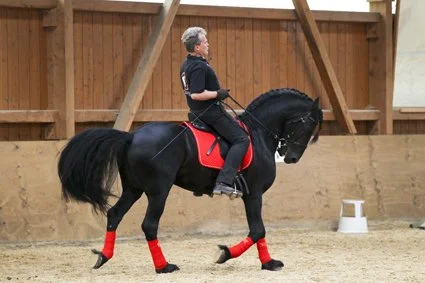
“Training should not start before the age of four, and then only very carefully... One must remember that the growth plates of the vertebrae in the spine do not close until the age of six. Putting a rider on a three-year-old is a massive risk to the long-term health of the back."
Dr. Gerd Heuschmann, DVM is a veterinarian, professional rider, and author specializing in equine biomechanics.
The Source: Tug of War: Classical Schooling vs. Modern Training (Referenced in numerous lectures: The Science of Training)

“The horse’s back is a bridge. If that bridge is loaded while it is still in the developmental stage—specifically when the vertebral epiphyses are still cartilaginous—the resulting remodeling can lead to permanent spinal pathology and arthritis."
Dr. James Rooney, DVM, Former Director of the Gluck Equine Research Center; renowned Veterinary Pathologist.
The Source: The Biomechanics of Lameness in Horses
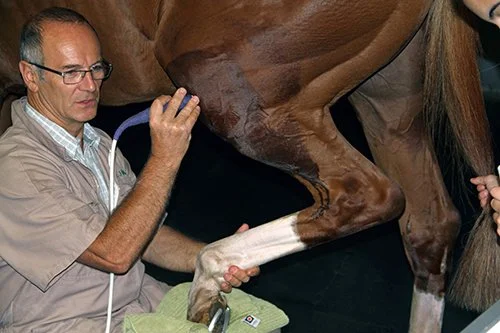
"The thoracolumbar spine is the most complex region of the horse's musculoskeletal system. In young horses, the lack of mineralization in the vertebral processes makes the spine highly susceptible to vertical compression and dorsal displacement when carrying a rider."
Dr. Jean-Marie Denoix, DVM, PhD President of the International Society of Equine Locomotor Pathology (ISELP); Professor of Anatomy.
The Source: The Equine Distal Limb / Spinal Imaging Studies

"The development of the equine spine is a slow process. Radiographic evidence shows that the secondary centers of ossification in the vertebral bodies are not completed until the fifth or sixth year of life, meaning the back remains vulnerable to stress throughout early training."
Dr. Leo Jeffcott, B.Vet.Med., PhD, FRCVS, Former Dean of the Veterinary School at the University of Cambridge; World authority on equine spinal diseases.
The Source: Disorders of the Equine Back1. The Science of the "Bottom-Up" Fusion
The Karma Ranch Standard: The 95-Moon Rule

When a 'finished' jumper or a broken-down barrel horse arrives at Karma Ranch, we aren't looking at a horse that failed the sport; we are looking at a skeletal system that survived the impossible. On our 250+ acres, we replace that 3,000lb landing force or those tight torque turns with the steady, healing rhythm of miles of natural movement. We aren't asking them to clear fences anymore or race around barrels; we're asking them to clear the inflammation and trauma from their joints.
At Karma Ranch, we believe in a more realistic and compassionate goal. We refuse to follow outdated traditions that sacrifice a horse's long-term health for a "quick resale" or an early ribbon.
Patience over Projects: We advocate at least a year of "let-down" for OTTBs to allow their bodies and minds to heal.
Bond over Brutes: We prioritize groundwork and trust as the skeleton continues to form. If a baby needs to move slowly, we let them.
Space to Heal: Our goal of 250+ acres isn't just for show. It’s to provide the movement and natural environment these horses need to regulate their nervous systems and grow strong.
At Karma Ranch, we aren't just raising horses; we are protecting their future. Because a horse started with respect for its biology, it is a horse that stays sound until their late 30’s, maybe early 40’s.
The industry sees a 10-year-old horse and sees an ending. At Karma Ranch, we look at that same horse and see a beginning. On our 250+ acres, we aren't just giving them a place to stand; we are giving them the miles, the movement, and the time they were always owed. We are proving that when you honor the biology of the horse, the 'discarded' become the 'restored.

Frequently Asked Questions: Equine Maturity & Longevity
When is a horse's skeleton fully mature? While lower leg bones fuse early, a horse’s vertebral column (spine) does not finish fusing until at least age 6, and often age 8 for large breeds or males.
Does the breed of the horse determine how fast they mature? No. This is one of the most persistent myths in the industry. While some breeds (like Quarter Horses) may look physically muscular at age two, their skeletal fusion follows the same species-wide timeline. Whether it is a pony or a Shire, the growth plates in the spine do not finish fusing until at least age six, and often as late as age eight.
Is it safe to start a horse under saddle at age two or three? Biologically, the answer is no. At ages two and three, the horse’s vertebral column is still comprised of shifting growth plates and soft cartilage rather than solid bone. Placing a rider's weight on a "bridge" (the back) that hasn't solidified can lead to long-term issues such as Kissing Spine and early-onset arthritis.
Why do so many professional trainers start horses so young? The industry is largely driven by economics, specifically the "Futurity" system. High-stakes races and shows for three and four-year-olds incentivize owners to push for early results. This "fast-tracking" often prioritizes short-term ribbons over the horse’s ability to remain sound into their twenties and thirties.
What are the signs that a 10-year-old horse was started too early? The most common indicators are "mystery lameness," the need for frequent joint injections (the maintenance cycle), and behavioral issues like being "sour," "cold-backed," or resistant to work. These are often not "bad attitudes" but physiological responses to chronic pain caused by juvenile micro-traumas.
Can a horse that was "broken" by age ten ever be restored? Yes, but it requires a radical shift in the environment. Restoration requires a "let-down" period where the horse is given space for natural, self-regulated movement. On our 250+ acres, we use the track system to encourage miles of movement, which helps rebuild bone density and allows the nervous system to regulate after years of high-pressure performance.
How did Scamper stay sound for so long if other barrel horses break? Scamper’s longevity was a direct result of his late start. Because he wasn't subjected to the extreme torque of a barrel pattern until his skeleton was nearly mature (at age seven), his joints and spine remained intact. This allowed him to win 10 world titles and live to be 35 years old—long after early-started horses are usually retired.
What is the "95-Moon Milestone"? The 95-Moon Milestone refers to the roughly 8-year period it takes for a horse to reach full skeletal integrity. It represents a commitment to honoring the horse’s biology over industry deadlines, ensuring that every horse—from Thoroughbreds to Drafts—has a foundation built to last a lifetime.